Things to do in St. Marys

Activities, attractions and tours

Washed ashore sea star.  #travel #seastar #beach #welovetoexplore

https://www.facebook.com/welovetoexplore/timeline/story?ut=43&wstart=0&wend=1422777599&hash=3585313150704558958&pagefilter=3
Washed ashore sea star.  #travel #seastar #beach #welovetoexplore

https://www.facebook.com/welovetoexplore/timeline/story?ut=43&wstart=0&wend=1422777599&hash=3585313150704558958&pagefilter=3
Quaint town near the Golden Isles
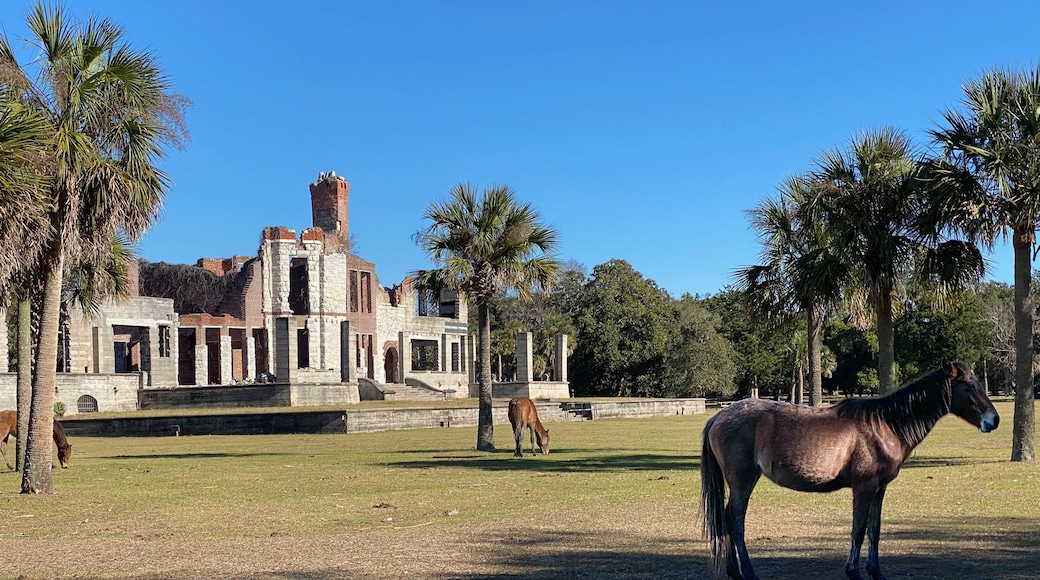
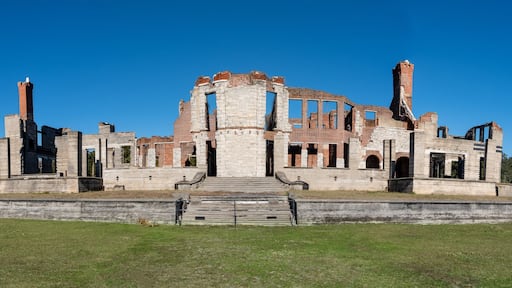
Dungeness on Cumberland Island, Georgia, is a ruined mansion that is part of a historic district that was the home of several families significant in American history. James Oglethorpe first built on Cumberland Island in 1736, building a hunting lodge that he named Dungeness. Oglethorpe named the place after Dungeness, in England. The next Dungeness was the legacy of Revolutionary War hero Nathanael Greene, who had acquired 11,000 acres of island land in exchange for a bad debt. His widow built a four-story tabby mansion in 1803, over a Timucuan shell mound. During the War of 1812 the island was occupied by the British, who used the house as a headquarters.
In 1818 Henry “Light-Horse Harry” Lee, a dashing cavalry commander during the Revolutionary War and father of Robert E. Lee, stayed at the house until his death on March 25, 1818, cared for by Greene's daughter Louisa, and was laid to rest in nearby cemetery with full military honors provided by an American fleet stationed at St. Marys, Georgia. The house was abandoned during the U.S. Civil War and burned in 1866. 
In the 1880s the property was purchased by Thomas M. Carnegie, brother of Andrew Carnegie, who began to build a new mansion on the site. The 59-room Queen Anne style mansion and grounds were completed after Carnegie's death in 1886. His wife Lucy continued to live at Dungeness and built other estates for her children, including Greyfield for Margaret Carnegie, Plum Orchard for George Lauder Carnegie, and Stafford Plantation. By this time, the Carnegies owned 90% of the island.
The Carnegies moved out of Dungeness in 1925. In 1959 the Dungeness mansion was destroyed by fire, alleged to be arson. The ruins are today preserved by the National Park Service as part of Cumberland Island National Seashore. They were acquired by the Park Service in 1972.
Dungeness on Cumberland Island, Georgia, is a ruined mansion that is part of a historic district that was the home of several families significant in American history. James Oglethorpe first built on Cumberland Island in 1736, building a hunting lodge that he named Dungeness. Oglethorpe named the place after Dungeness, in England. The next Dungeness was the legacy of Revolutionary War hero Nathanael Greene, who had acquired 11,000 acres of island land in exchange for a bad debt. His widow built a four-story tabby mansion in 1803, over a Timucuan shell mound. During the War of 1812 the island was occupied by the British, who used the house as a headquarters.
In 1818 Henry “Light-Horse Harry” Lee, a dashing cavalry commander during the Revolutionary War and father of Robert E. Lee, stayed at the house until his death on March 25, 1818, cared for by Greene's daughter Louisa, and was laid to rest in nearby cemetery with full military honors provided by an American fleet stationed at St. Marys, Georgia. The house was abandoned during the U.S. Civil War and burned in 1866. 
In the 1880s the property was purchased by Thomas M. Carnegie, brother of Andrew Carnegie, who began to build a new mansion on the site. The 59-room Queen Anne style mansion and grounds were completed after Carnegie's death in 1886. His wife Lucy continued to live at Dungeness and built other estates for her children, including Greyfield for Margaret Carnegie, Plum Orchard for George Lauder Carnegie, and Stafford Plantation. By this time, the Carnegies owned 90% of the island.
The Carnegies moved out of Dungeness in 1925. In 1959 the Dungeness mansion was destroyed by fire, alleged to be arson. The ruins are today preserved by the National Park Service as part of Cumberland Island National Seashore. They were acquired by the Park Service in 1972.

  • find price illustration

    Explore activities

    Explore thousands of experiences from activities and attractions to day tours and transfer.
  • calendar shield illustration

    Book with ease

    Skip the line- book tickets online in minutes to top attractions with free cancellation on many activities.
  • trophy illustration

    Treat yourself

    Members save % or more when you book activities.

What to do in St. Marys


Popular places to visit

Frequently asked questions

Is St. Marys worth visiting?
Offering a blend of bars and pubs and culture, there are plenty of things to do in St. Marys. While you're here, check out Laurel Island Links, a major attraction in the area.
How do I spend a day in St. Marys?
Start your day with a visit to Cumberland Island Ferry and St. Marys Railroad Museum. Then, explore different areas of St. Marys for a bite to eat and some souvenir shopping.
What is the top tourist attraction in St. Marys?
Laurel Island Links is one of the top tourist attractions in St. Marys and should be high on every sightseeing itinerary of the area.
Is three days enough to stay in St. Marys?
Book a vacation in St. Marys for three days and you'll have plenty of time to explore its leading sights and experience the local way of life. For the chance to see attractions in the surrounding areas and venture off the beaten path, consider sticking around for seven to ten days.
What are some activities to do in St. Marys with kids?
Whether you're vacationing with tiny adventurers or hard-to-please teens, an itinerary filled with fun activities is the key to a stress-free getaway. Check out our recommendations for what to do in St. Marys with kids.

What to do in St. Marys for adults?
St. Marys Submarine Museum and Club at Osprey Cove are just a few of the things to do in St. Marys. With loads of activities available, there's something here for everyone to explore.
Are there free things to do in St. Marys?
One of the simplest ways to learn about free things to do in St. Marys is to ask a local tour guide. You'll get insider views on interesting neighborhoods, parks and other major attractions you can experience without getting your cash out. McIntosh Sugarmill Park is one sight that doesn't have an entrance fee.