Things to do in Kenai Peninsula Borough
Activities, attractions and tours
Visit Kenai Peninsula Borough
- Explore activitiesExplore thousands of experiences from activities and attractions to day tours and transfer.
- Book with easeSkip the line- book tickets online in minutes to top attractions with free cancellation on many activities.
- Treat yourselfMembers save % or more when you book activities.
Most popular experiences in Kenai Peninsula Borough
Tours & day trips
See all 42 activities
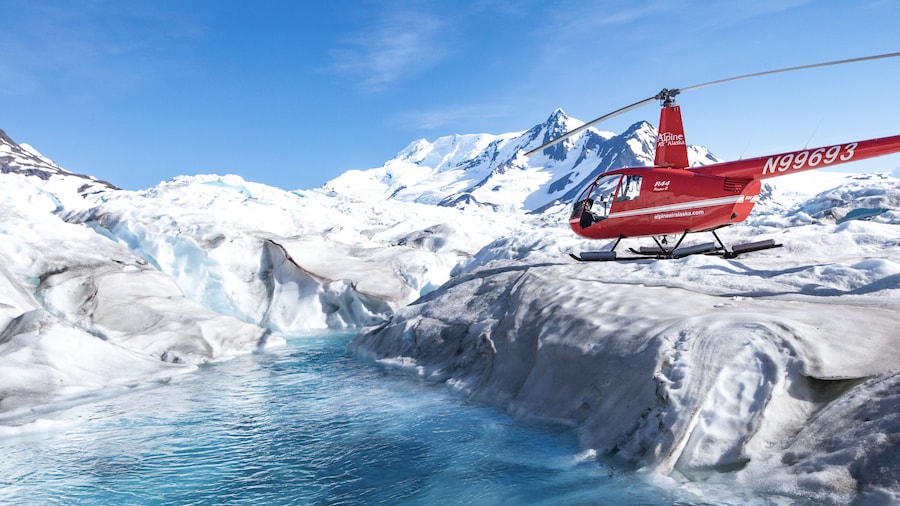
Wilderness, Wildlife, Glacier Experience from Anchorage
Activity duration is 6 hours
9.8 out of 10 with 599 reviews
Free cancellation available
Private & custom tours
See all 17 activities
Self-Guided Seward Hwy Scenic Drive: Anchorage-Seward Roundtrip
Activity duration is 3 hours
Free cancellation available
Wildlife & nature
See all 6 activities
Whittier to Anchorage Land Transfer Tour With AWCC
Activity duration is 8 hours
9.6 out of 10 with 17 reviews
Free cancellation available
Food, drink & nightlife
See all 3 activities
Wildlife Center with Lunch and Local Beer Sampling
Activity duration is 5 hours
9.8 out of 10 with 36 reviews
Free cancellation available
History & culture
See all 3 activities
Seward Highway: A Self Guided Drive of Alaska's Historic Road
Activity duration is 3 hours and 30 minutes
Free cancellation available


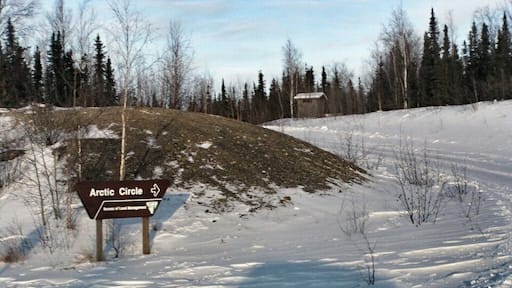
![The Arctic Circle is one of the five major circles of latitude that mark maps of the Earth. As of 16 February 2015, it runs 66°33′45.6″ north of the Equator.
The region north of this circle is known as the Arctic, and the zone just to the south is called the Northern Temperate Zone. The equivalent polar circle in the Southern Hemisphere is called the Antarctic Circle.
The Arctic Circle is the southernmost latitude in the Northern Hemisphere at which the sun can remain continuously above or below the horizon for 24 hours (at the June solstice and December solstice respectively). North of the Arctic Circle, the sun is above the horizon for 24 continuous hours at least once per year (and therefore visible at midnight) and below the horizon for 24 continuous hours at least once per year (and therefore not visible at noon). On the Arctic Circle those events occur, in principle, exactly once per year, at the June and December solstices, respectively. However, in practice, because of atmospheric refraction and mirages, and because the sun appears as a disk and not a point, part of the midnight sun may be seen on the night of the northern summer solstice up to about 50′ (90 km (56 mi)) south of the Arctic Circle; similarly, on the day of the northern winter solstice, part of the sun may be seen up to about 50′ north of the Arctic Circle. That is true at sea level; those limits increase with elevation above sea level, although in mountainous regions there is often no direct view of the true horizon.
The position of the Arctic Circle is not fixed. It directly depends on the Earth's axial tilt, which fluctuates within a margin of 2° over a 40,000-year period,[2] notably due to tidal forces resulting from the orbit of the Moon. The Arctic Circle is currently drifting northwards at a speed of about 15 m (49 ft) per year; see Circle of latitude for more information.
#snow](https://images.trvl-media.com/place/6140564/a9f9449e-bab4-40a6-a9a1-5356b0cc2aa8.jpg?impolicy=fcrop&w=512&h=288&q=medium)