Bellefontaine Cemetery

Bellefontaine Cemetery is a nonprofit, non-denominational cemetery and arboretum located in St. Louis, Missouri. Founded in 1849 as a rural cemetery, Bellefontaine is home to a number of architecturally significant monuments and mausoleums such as the Louis Sullivan-designed Wainwright Tomb, which is listed on the National Register of Historic Places. The cemetery contains 314 acres of land and over 87,000 graves, including those of William Clark, Adolphus Busch, Thomas Hart Benton, and William S. Burroughs. Many Union and Confederate soldiers from the American Civil War are buried at Bellefontaine, as well as numerous local and state politicians.

As of 2012 over 87,000 people have been buried at Bellefontaine Cemetery, and approximately 100 new burials take place each year. Bellefontaine remains a non-profit, non-denominational cemetery, and still holds over 100 acres of open, unused land. Some of this extra land has recently been converted into prairie and woodland. Bellefontaine contains over 14 miles of paved roads and, as an accredited arboretum, is home to over 180 species of trees and shrubs. A new lakeside garden and columbarium were completed in 2010, and other major landscaping projects are planned or in progress.

The cemetery contains the graves of many prominent pioneers to the West, as well as businessmen, politicians, and generals who remain significant figures in the history of St. Louis and the United States. The oldest graves in the cemetery are located on pioneer Edward Hempstead’s family lot and date as far back as 1816. Many of the wealthiest families at Bellefontaine are interred in ornate mausoleums which overlook the Mississippi River and draw from Classical, Romanesque, Gothic, and Egyptian architectural styles. Among the most notable mausoleums in the cemetery are: the Wainwright Tomb, designed for Charlotte Dickson Wainwright by the famed Chicago school architect Louis Sullivan in 1892; the Busch Mausoleum, designed for Adolphus Busch and Lilly Anheuser by Barnett, Haynes & Barnett in 1915; and the Brown Brothers Mausoleums, designed in 1910 by Isaac Taylor and in 1928 by Mauran, Russell and Crowell. There are also a number of large family plots in the cemetery, many of which are marked by tall obelisk monuments with elaborate bases. Guided tours of the cemetery’s main historical and architectural highlights are available and are open to the public. Alternatively, visitors can obtain self-guided tour brochures at the cemetery office.

The cemetery was listed on the National Register of Historic Places in 2014.

#LIFEATEXPEDIA
Bellefontaine Cemetery is a nonprofit, non-denominational cemetery and arboretum located in St. Louis, Missouri. Founded in 1849 as a rural cemetery, Bellefontaine is home to a number of architecturally significant monuments and mausoleums such as the Louis Sullivan-designed Wainwright Tomb, which is listed on the National Register of Historic Places. The cemetery contains 314 acres of land and over 87,000 graves, including those of William Clark, Adolphus Busch, Thomas Hart Benton, and William S. Burroughs. Many Union and Confederate soldiers from the American Civil War are buried at Bellefontaine, as well as numerous local and state politicians.
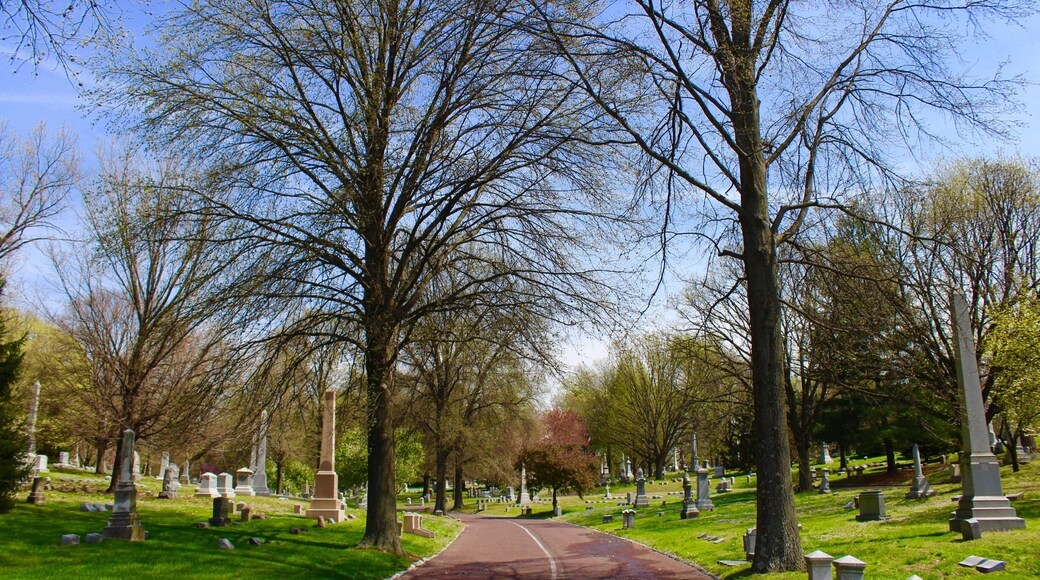
As of 2012 over 87,000 people have been buried at Bellefontaine Cemetery, and approximately 100 new burials take place each year. Bellefontaine remains a non-profit, non-denominational cemetery, and still holds over 100 acres of open, unused land. Some of this extra land has recently been converted into prairie and woodland. Bellefontaine contains over 14 miles of paved roads and, as an accredited arboretum, is home to over 180 species of trees and shrubs. A new lakeside garden and columbarium were completed in 2010, and other major landscaping projects are planned or in progress.

The cemetery contains the graves of many prominent pioneers to the West, as well as businessmen, politicians, and generals who remain significant figures in the history of St. Louis and the United States. The oldest graves in the cemetery are located on pioneer Edward Hempstead’s family lot and date as far back as 1816. Many of the wealthiest families at Bellefontaine are interred in ornate mausoleums which overlook the Mississippi River and draw from Classical, Romanesque, Gothic, and Egyptian architectural styles. Among the most notable mausoleums in the cemetery are: the Wainwright Tomb, designed for Charlotte Dickson Wainwright by the famed Chicago school architect Louis Sullivan in 1892; the Busch Mausoleum, designed for Adolphus Busch and Lilly Anheuser by Barnett, Haynes & Barnett in 1915; and the Brown Brothers Mausoleums, designed in 1910 by Isaac Taylor and in 1928 by Mauran, Russell and Crowell. There are also a number of large family plots in the cemetery, many of which are marked by tall obelisk monuments with elaborate bases. Guided tours of the cemetery’s main historical and architectural highlights are available and are open to the public. Alternatively, visitors can obtain self-guided tour brochures at the cemetery office.

The cemetery was listed on the National Register of Historic Places in 2014.

#LIFEATEXPEDIA
Bellefontaine Cemetery is a nonprofit, non-denominational cemetery and arboretum located in St. Louis, Missouri. Founded in 1849 as a rural cemetery, Bellefontaine is home to a number of architecturally significant monuments and mausoleums such as the Louis Sullivan-designed Wainwright Tomb, which is listed on the National Register of Historic Places. The cemetery contains 314 acres of land and over 87,000 graves, including those of William Clark, Adolphus Busch, Thomas Hart Benton, and William S. Burroughs. Many Union and Confederatesoldiers from the American Civil War are buried at Bellefontaine, as well as numerous local and state politicians.

As of 2012 over 87,000 people have been buried at Bellefontaine Cemetery, and approximately 100 new burials take place each year. Bellefontaine remains a non-profit, non-denominational cemetery, and still holds over 100 acres of open, unused land. Some of this extra land has recently been converted into prairie and woodland. Bellefontaine contains over 14 miles of paved roads and, as an accredited arboretum, is home to over 180 species of trees and shrubs. A new lakeside garden and columbarium were completed in 2010, and other major landscaping projects are planned or in progress.

The cemetery contains the graves of many prominent pioneers to the West, as well as businessmen, politicians, and generals who remain significant figures in the history of St. Louis and the United States. The oldest graves in the cemetery are located on pioneer Edward Hempstead’s family lot and date as far back as 1816. Many of the wealthiest families at Bellefontaine are interred in ornate mausoleums which overlook the Mississippi River and draw from Classical, Romanesque, Gothic, and Egyptian architectural styles. Among the most notable mausoleums in the cemetery are: the Wainwright Tomb, designed for Charlotte Dickson Wainwright by the famed Chicago school architect Louis Sullivan in 1892; the Busch Mausoleum, designed for Adolphus Busch and Lilly Anheuser by Barnett, Haynes & Barnett in 1915; and the Brown Brothers Mausoleums, designed in 1910 by Isaac Taylor and in 1928 by Mauran, Russell and Crowell. There are also a number of large family plots in the cemetery, many of which are marked by tall obelisk monuments with elaborate bases. Guided tours of the cemetery’s main historical and architectural highlights are available and are open to the public. Alternatively, visitors can obtain self-guided tour brochures at the cemetery office.

The cemetery was listed on the National Register of Historic Places in 2014.

#LIFEATEXPEDIA
Bellefontaine Cemetery is a nonprofit, non-denominational cemetery and arboretum located in St. Louis, Missouri. Founded in 1849 as a rural cemetery, Bellefontaine is home to a number of architecturally significant monuments and mausoleums such as the Louis Sullivan-designed Wainwright Tomb, which is listed on the National Register of Historic Places. The cemetery contains 314 acres of land and over 87,000 graves, including those of William Clark, Adolphus Busch, Thomas Hart Benton, and William S. Burroughs. Many Union and Confederatesoldiers from the American Civil War are buried at Bellefontaine, as well as numerous local and state politicians.
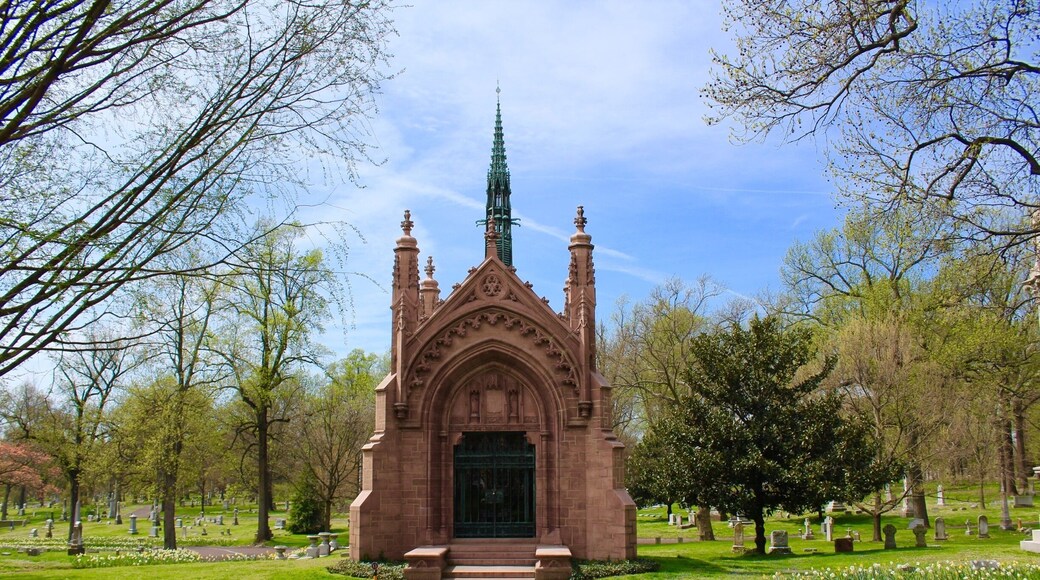
As of 2012 over 87,000 people have been buried at Bellefontaine Cemetery, and approximately 100 new burials take place each year. Bellefontaine remains a non-profit, non-denominational cemetery, and still holds over 100 acres of open, unused land. Some of this extra land has recently been converted into prairie and woodland. Bellefontaine contains over 14 miles of paved roads and, as an accredited arboretum, is home to over 180 species of trees and shrubs. A new lakeside garden and columbarium were completed in 2010, and other major landscaping projects are planned or in progress.

The cemetery contains the graves of many prominent pioneers to the West, as well as businessmen, politicians, and generals who remain significant figures in the history of St. Louis and the United States. The oldest graves in the cemetery are located on pioneer Edward Hempstead’s family lot and date as far back as 1816. Many of the wealthiest families at Bellefontaine are interred in ornate mausoleums which overlook the Mississippi River and draw from Classical, Romanesque, Gothic, and Egyptian architectural styles. Among the most notable mausoleums in the cemetery are: the Wainwright Tomb, designed for Charlotte Dickson Wainwright by the famed Chicago school architect Louis Sullivan in 1892; the Busch Mausoleum, designed for Adolphus Busch and Lilly Anheuser by Barnett, Haynes & Barnett in 1915; and the Brown Brothers Mausoleums, designed in 1910 by Isaac Taylor and in 1928 by Mauran, Russell and Crowell. There are also a number of large family plots in the cemetery, many of which are marked by tall obelisk monuments with elaborate bases. Guided tours of the cemetery’s main historical and architectural highlights are available and are open to the public. Alternatively, visitors can obtain self-guided tour brochures at the cemetery office.

The cemetery was listed on the National Register of Historic Places in 2014.

#LIFEATEXPEDIA
Bellefontaine Cemetery is a nonprofit, non-denominational cemetery and arboretum located in St. Louis, Missouri. Founded in 1849 as a rural cemetery, Bellefontaine is home to a number of architecturally significant monuments and mausoleums such as the Louis Sullivan-designed Wainwright Tomb, which is listed on the National Register of Historic Places. The cemetery contains 314 acres of land and over 87,000 graves, including those of William Clark, Adolphus Busch, Thomas Hart Benton, and William S. Burroughs. Many Union and Confederate soldiers from the American Civil War are buried at Bellefontaine, as well as numerous local and state politicians.
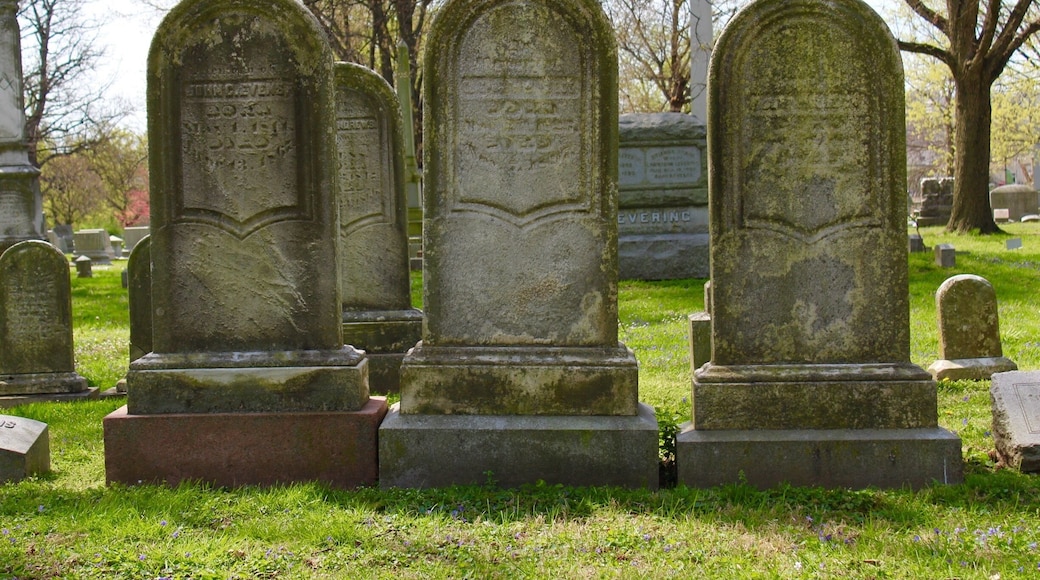
As of 2012 over 87,000 people have been buried at Bellefontaine Cemetery, and approximately 100 new burials take place each year. Bellefontaine remains a non-profit, non-denominational cemetery, and still holds over 100 acres of open, unused land. Some of this extra land has recently been converted into prairie and woodland. Bellefontaine contains over 14 miles of paved roads and, as an accredited arboretum, is home to over 180 species of trees and shrubs. A new lakeside garden and columbarium were completed in 2010, and other major landscaping projects are planned or in progress.

The cemetery contains the graves of many prominent pioneers to the West, as well as businessmen, politicians, and generals who remain significant figures in the history of St. Louis and the United States. The oldest graves in the cemetery are located on pioneer Edward Hempstead’s family lot and date as far back as 1816. Many of the wealthiest families at Bellefontaine are interred in ornate mausoleums which overlook the Mississippi River and draw from Classical, Romanesque, Gothic, and Egyptian architectural styles. Among the most notable mausoleums in the cemetery are: the Wainwright Tomb, designed for Charlotte Dickson Wainwright by the famed Chicago school architect Louis Sullivan in 1892; the Busch Mausoleum, designed for Adolphus Busch and Lilly Anheuser by Barnett, Haynes & Barnett in 1915; and the Brown Brothers Mausoleums, designed in 1910 by Isaac Taylor and in 1928 by Mauran, Russell and Crowell. There are also a number of large family plots in the cemetery, many of which are marked by tall obelisk monuments with elaborate bases. Guided tours of the cemetery’s main historical and architectural highlights are available and are open to the public. Alternatively, visitors can obtain self-guided tour brochures at the cemetery office.

The cemetery was listed on the National Register of Historic Places in 2014.

#LIFEATEXPEDIA


Popular places to visit


Top Hotel Deals

Super 8 by Wyndham St. Louis North

Super 8 by Wyndham St. Louis North

2 out of 5
6200 N Broadway St. Louis MO
Super 8 by Wyndham St. Louis North
21C Museum Hotel St Louis

21C Museum Hotel St Louis

4.5 out of 5
1528 Locust street St. Louis MO
21C Museum Hotel St Louis
Angad Arts Hotel St. Louis, Tapestry Collection by Hilton

Angad Arts Hotel St. Louis, Tapestry Collection by Hilton

4 out of 5
3550 Samuel Sheppard Drive St. Louis MO

Angad Arts Hotel St. Louis, Tapestry Collection by Hilton
The West End

The West End

2 out of 5
4215 Lindell Blvd St. Louis MO
The West End
Guest Host Motel

Guest Host Motel

2 out of 5
1920 N Grand Blvd St. Louis MO
Guest Host Motel
 The Royal Sonesta Chase Park Plaza St. Louis

The Royal Sonesta Chase Park Plaza St. Louis

4.5 out of 5
212 N Kingshighway St. Louis MO
The Royal Sonesta Chase Park Plaza St. Louis
Magnolia Hotel St. Louis, a Tribute Portfolio Hotel

Magnolia Hotel St. Louis, a Tribute Portfolio Hotel

4 out of 5
421 N 8th St St. Louis MO
Magnolia Hotel St. Louis, a Tribute Portfolio Hotel
Pear Tree Inn St. Louis Near Union Station

Pear Tree Inn St. Louis Near Union Station

3 out of 5
2211 Market Street St. Louis MO
Pear Tree Inn St. Louis Near Union Station
Hyatt Regency St. Louis at The Arch

Hyatt Regency St. Louis at The Arch

4 out of 5
315 Chestnut St St. Louis MO
Hyatt Regency St. Louis at The Arch
Lowest nightly price found within the past 24 hours based on a 1 night stay for 2 adults. Prices and availability subject to change. Additional terms may apply.