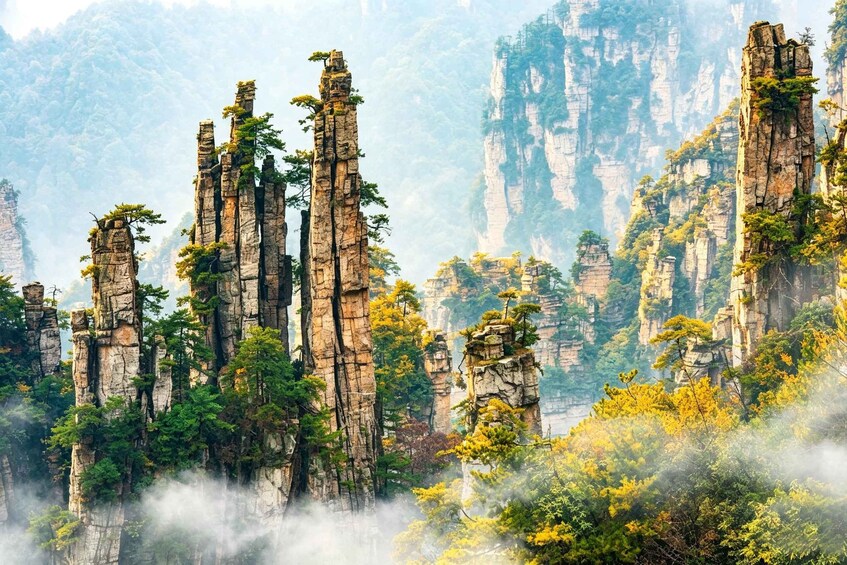
Forest Park — feel small. Quartz-sandstone pillars rise over 1,000 ft, moss-wrapped and mist-drifted—the landscape said to inspire Avatar’s floating mountains. At Yuanjiajie, thousands of stone towers stretch to the horizon: planetary, not cinematic. Golden Whip Stream is green and primeval—clear water, shaded paths, bold macaques snatching snacks. Bailong Elevator, a glass lift built into the cliff, shoots you 326 m up in two minutes; at the top, peaks become islands above cloud. Moment: a cliff-hugging plank road, vertigo on one side, a local grandmother handing you pickled cucumber on the other. Impulse: you come for the photo; you leave having stood inside something older than you.
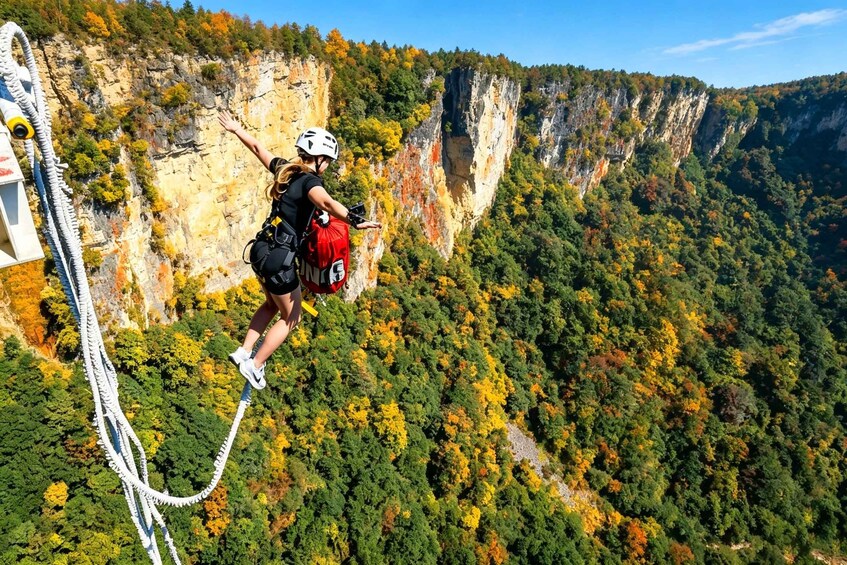
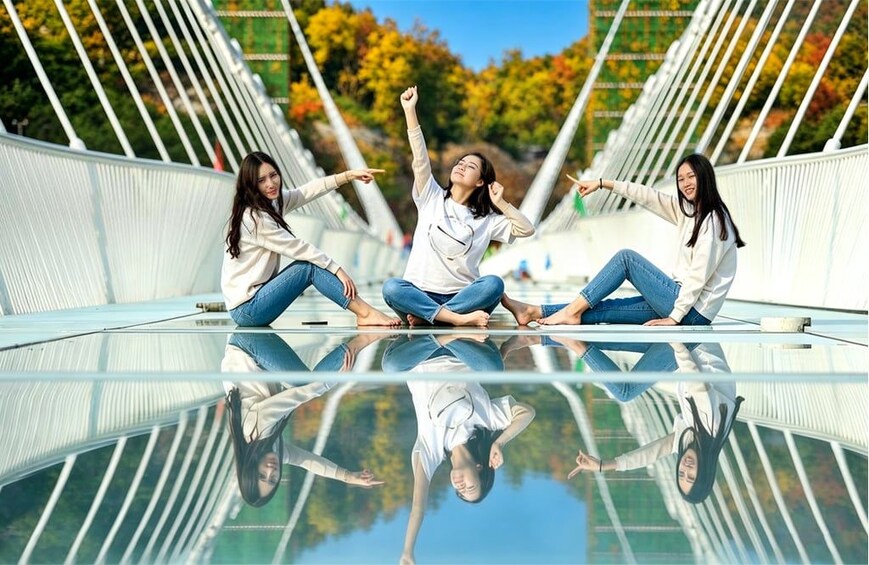
Grand Canyon — feel dared. A 430 m glass bridge hangs 300 m above a green gorge. First step is cognitive collision: eyes see the drop, feet feel solid, brain refuses. The bridge flexes, adding adrenaline. Then a zipline over empty space, wind in your face, the canyon floor below. Moment: the several-kilometer walk along the river at the bottom—cool air off the water, shade from cliffs, the whole canyon breathing around you. Travelers call it “that magical walk along the river” and say it alone is worth the visit. Impulse: curiosity about what your knees will do when the ground disappears—and what the canyon feels like from inside.
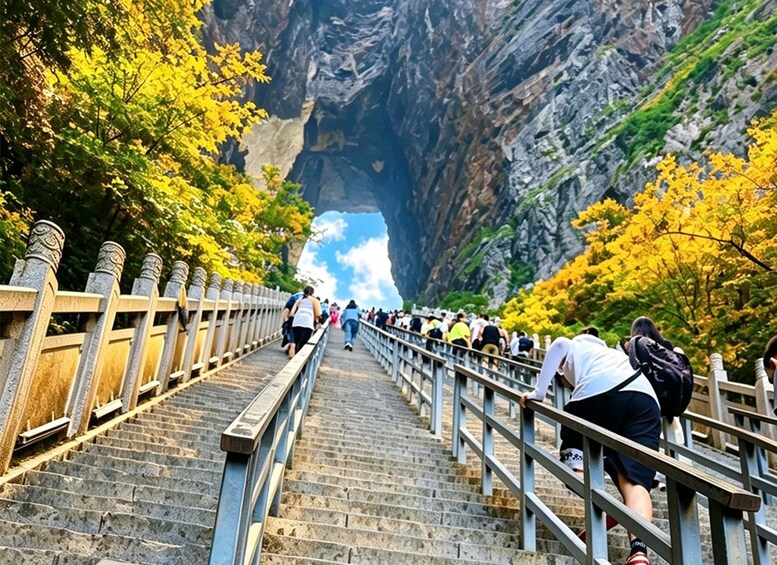
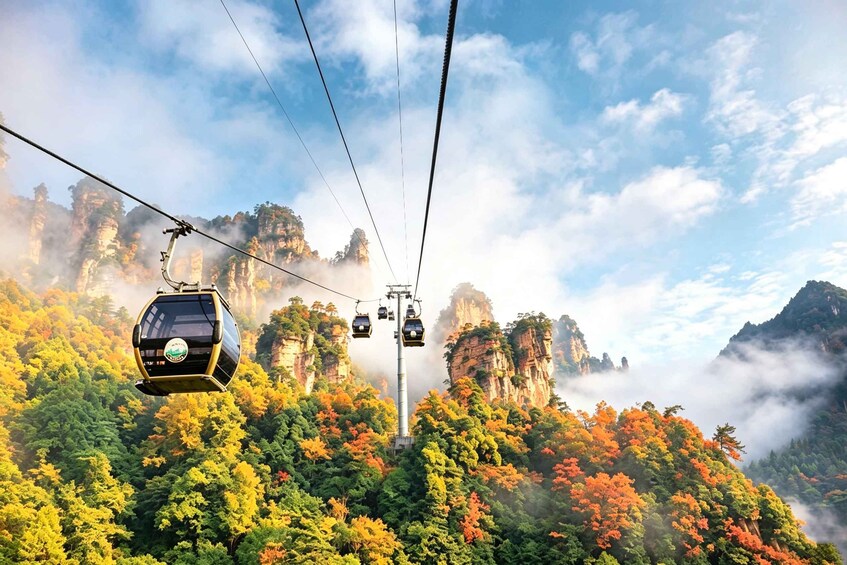
Tianmen Mountain — feel answered. A 28-minute cable car lifts you from city rooftops into cloud, one of the world’s longest high-mountain rides. Below, the 99-Bend Road coils; ahead, Heaven’s Gate opens through rock, a 131.5 m natural arch, with 999 steps rising into sky. The climb is steep but has platforms to breathe. As one visitor put it: “that exact moment when you stand under the arch, watching clouds float through it, and suddenly you believe anything is possible.” At the top, the Panlongya glass skywalk hangs at 1,430 m—“terrifyingly beautiful and beautifully terrifying.” Impulse: some places you visit; Tianmen is a place you answer.
Charm Xiangxi — feel the night pull you in. The show is a 1.5-hour collision with five ethnic minority cultures—Tujia, Miao, Bai, Dong, Yao—from indoor ritual to outdoor fire and blade. The Crying Marriage is sung into the room, a Tujia wedding lament that makes no linguistic sense yet lands in the chest. Then the fourth wall breaks: Spanish traveler Pablo was pulled onstage, dressed in ethnic costume, taught a few dance steps. “We’ve never seen anything like it… It made me want to keep understanding Chinese culture.” Another called it “a show that can rival Cirque du Soleil.” The night ends around a bonfire, drums pounding, strangers pulled into one circle. Feeling: not “I watched a show,” but “I was briefly inside someone else’s world and didn’t want to step out.” The moments that stay need no translation: a stranger’s hand pulling you up to dance, firelight on faces that were strangers an hour ago.
Zhangjiajie is not a checklist—it is a sequence of bodily and emotional states.