

- List your property
- Support
- Trips
 Members save 10% or more on over 100,000 hotels worldwide when you’re signed in


Tenerife: Teide National Park Sunset & Stargazing Tour
Features
- Free cancellation available
- 3h+
- Mobile voucher
- Instant confirmation
- Selective hotel pickup
- Multiple languages
Overview
- Experience a breathtaking sunset above the clouds in Teide National Park
- Stargaze with one of Tenerife’s most experienced astronomy guides
- Observe planets, stars, and galaxies through professional telescopes
- Enjoy an optional dinner at a local restaurant before the tour
- Learn constellations using powerful green laser pointers
Activity location
- Arona
- Arona, Canarias, Spain
Meeting/Redemption Point
- 38690 Santiago del Teide, Santa Cruz de Tenerife, Spain | Meet your guide and the rest of the group at Mirador de los Poleos. We will always confirm the exact meeting time through WhatsApp. Present your voucher to the guide. You'll follow the guide from the sunset meeting point (Mirador de los Poleos), a 20-minute drive to the stargazing location using your own vehicle, following the excursion bus. (Don't use a Taxi)
- Las Manchas, Canarias, Spain
Multiple meeting/redemption points available, see location information for full list
Check availability
Self-Transportation without Meal
- 3h
- English
Choose this option to join the tour using your own vehicle. Meet your guide at a central location, and follow the group (bus) using your own transportation to Teide National Park. Transportation from the activity provider is not included with this option.
What's included, what's not
- Guided stargazing tour with one of Tenerife’s most experienced guides
- Pickup and drop-off at selected locations in southern Tenerife only if the transportation option is selected. Adding transportation later is possible if space allows
- Transportation in an air-conditioned vehicle (if option selected)
- 3-course meal (if option selected): pumpkin soup, roast chicken with Canary potatoes and salad, chocolate mousse. Soft drinks included. Vegetarian, vegan, and gluten-free options available; celiac-friendly meals possible
- Children’s menu: chicken nuggets with French fries
- Use of professional telescopes to observe planets, stars, and galaxies
- Laser pointers to identify constellations and key objects
- Sunset viewing above the clouds (weather permitting)
- Automatic WhatsApp message with info on the morning of the excursion
- Bookings can be changed if availability allows
- Weather conditions are verified, and guests are informed if rescheduling is needed
- Gratuities for the guide or driver (optional)
- Personal expenses or souvenirs not mentioned in the itinerary
- Hotel pickup outside the selected meeting points in southern Tenerife
- Additional food or drinks not listed under the meal option
- Jackets or blankets
Know before you book
- Not allowed: Alcohol and drugs, Alcoholic drinks in the vehicle, Drones, Firework, Food and drinks in the vehicle, Food in the vehicle, Making fire, Pets
What you can expect
If you’re an astronomy enthusiast or simply looking for a truly unique experience in Tenerife, a trip to Mount Teide is a must. Tenerife is famous for its exceptional natural beauty and crystal-clear skies, making it one of the best stargazing destinations in the world. Mount Teide, rising to 3,715 metres, is the highest peak in Spain and offers an extraordinary window into the night sky.
Join us for an unforgettable sunset and stargazing experience in Teide National Park. You’ll be picked up from selected meeting points in Costa Adeje, Playa de las Américas, and Los Cristianos before enjoying a scenic drive through Tenerife’s dramatic volcanic landscapes as we ascend toward the national park.
After all guests are picked up, we make a stop at a local restaurant along the way where guests who selected the meal option can enjoy a delicious dinner including soft drinks, water, and wine. This relaxing break allows you to recharge before continuing the journey into the mountains.
We’ll then witness a spectacular sunset above the clouds, as the sun dips below the horizon and the sky fills with vivid colours. Once night falls, we carefully select the best stargazing location based on weather and sky conditions to ensure the clearest possible views.
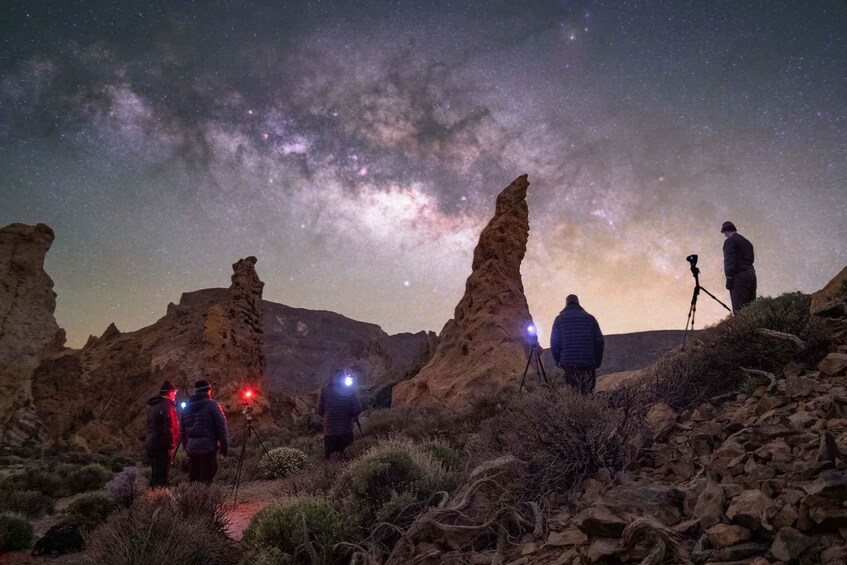
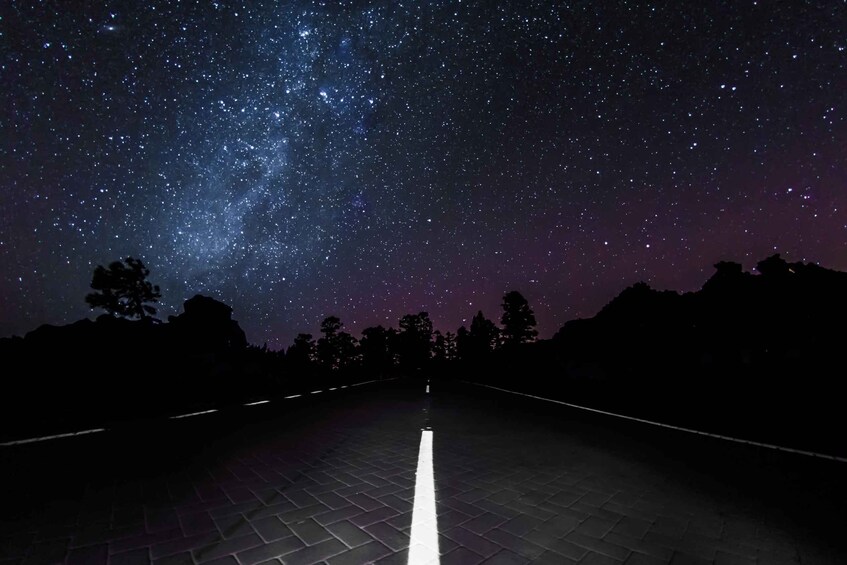
As the stars emerge, the real magic begins. Teide National Park is a Starlight-certified destination with minimal light pollution, offering exceptional views of the night sky. Using powerful green laser pointers, our guides will show you constellations, key stars, and explain how ancient civilizations used the sky for navigation.
Through professional telescopes, you may observe the Moon’s craters (when visible), planets depending on the season, nebulae, star clusters, double stars, and—when conditions allow—even the Andromeda Galaxy. At certain times of the year, the Milky Way can also be seen stretching across the sky.
We will also show you how to capture impressive photos of the night sky using your smartphone through the telescope, helping you take home unique memories from this extraordinary location.
An optional professional photography session is available during sunset and the stargazing portion of the tour for an additional cost, allowing you to capture unforgettable moments of your experience.
At the end of the evening, we will return you comfortably to your original meeting point, leaving you with lasting memories under one of the world’s most beautiful night skies.
Please note:
The Moon dominates the sky from two days before until the full moon
Planet visibility depends on the time of year (mainly autumn to winter)
The Milky Way is visible from summer through winter, depending on conditions
Location
Activity location
- Arona
- Arona, Canarias, Spain
Meeting/Redemption Point
- 38690 Santiago del Teide, Santa Cruz de Tenerife, Spain | Meet your guide and the rest of the group at Mirador de los Poleos. We will always confirm the exact meeting time through WhatsApp. Present your voucher to the guide. You'll follow the guide from the sunset meeting point (Mirador de los Poleos), a 20-minute drive to the stargazing location using your own vehicle, following the excursion bus. (Don't use a Taxi)
- Las Manchas, Canarias, Spain
- TF-82, 89, 38688 Guía de Isora, Santa Cruz de Tenerife, Spain | Meet your guide at the Restaurante Casa Sira and present your voucher to the guide. After enjoying the 3-course meal, follow the guide from the restaurant using your own vehicle to the sunset location. It's about a 20-minute drive, and then another 20-minute drive to the stargazing location. You will follow the bus. Don't use a Taxi.
- Guía de Isora, Canarias, Spain