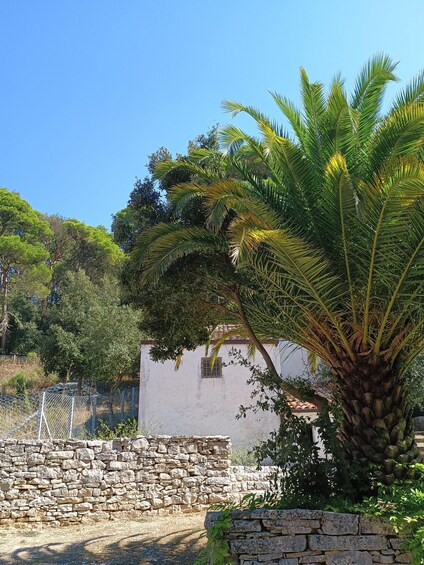
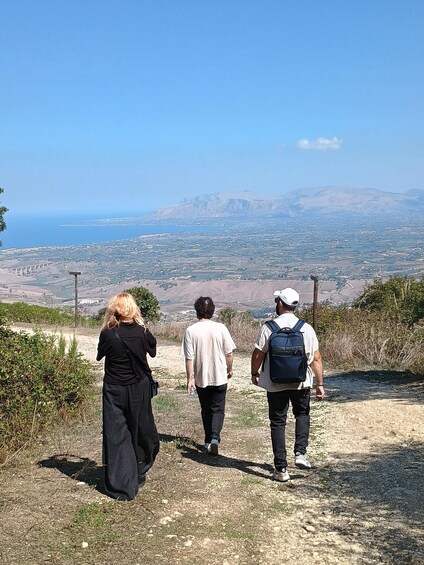
The hike begins at the rest area on the slopes of Mount Bonifato, where you will meet your guide and receive an initial introduction to the area.
Before setting off, we will stop for a few minutes to take in our location and the surrounding landscape. The guide will explain why this mountain has been an important landmark for the Alcamo area over the centuries.
From here, we will begin our trek, gradually entering the natural environment of Mount Bonifato.
As we explore the landscape, we will try to understand how humans have used the resources offered by the environment over time: water, natural shelters, land, vegetation and fauna.
Along the route, the focus will be on the archaeological and historical remains found on the mountain.
Along the route, we will discuss the medieval remains that can be seen along the way and, when the route allows, the defensive structures and the ancient settlement.
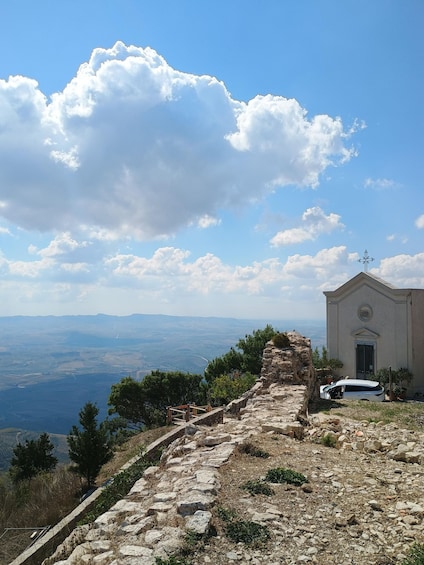
Particular attention will be paid to the Castle of the Ventimiglia family and the other historical structures in the area, explaining their function and relationship with the territory of Alcamo.
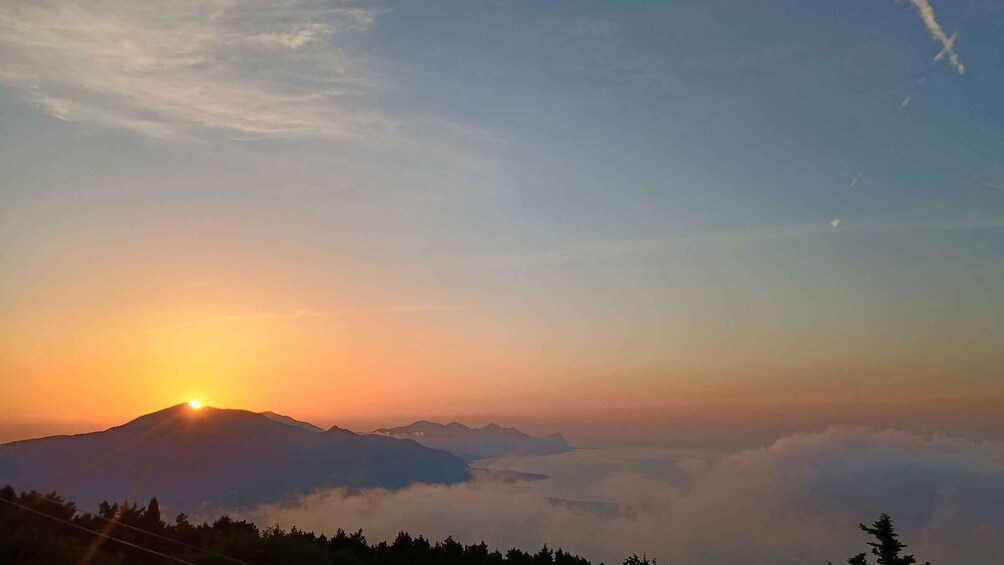
The guide will use the panorama to explain the geographical importance of Mount Bonifato.
Looking down on Alcamo, the Gulf of Castellammare, the mountains and the surrounding countryside, it will be easier to understand why this location was so important for controlling the territory.
The panorama will therefore become an integral part of the archaeological narrative: not just a spot for taking photos, but a true key to understanding the history of the mountain.
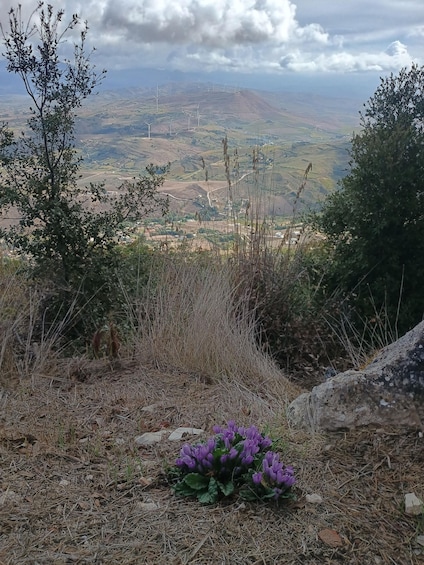
The guide will be able to point out some of the plant and animal species we will encounter.
In the final part of the experience, we will head to the pine forest for a convivial break.
Here you can relax after the hike, enjoy the natural environment and take part in the picnic, with the opportunity to taste traditional Sicilian products as provided by the organizers of the experience.
An experience that combines trekking, prehistory, archaeology, history, nature and Sicilian tradition.