Early departure from your hotel, then transfer by car to the village of Ambatozavavy. This is where the real adventure begins: a journey in a traditional paddle canoe to Ampasipohy, gliding along the mangrove in a silence filled with birds.
Upon arrival, your biologist, with thirty years of field experience in Madagascar, will lead the group together with your local guide.
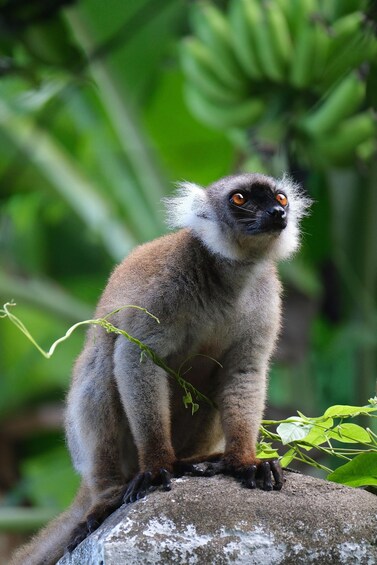
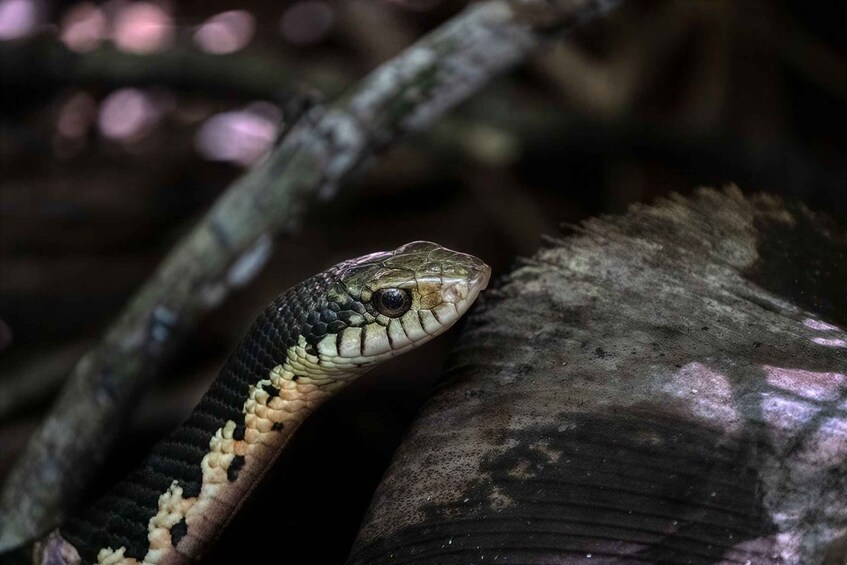
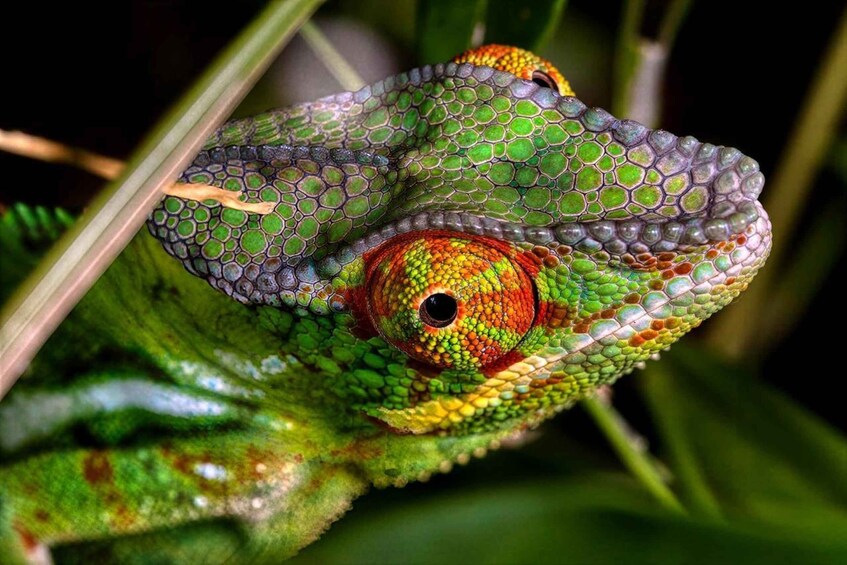
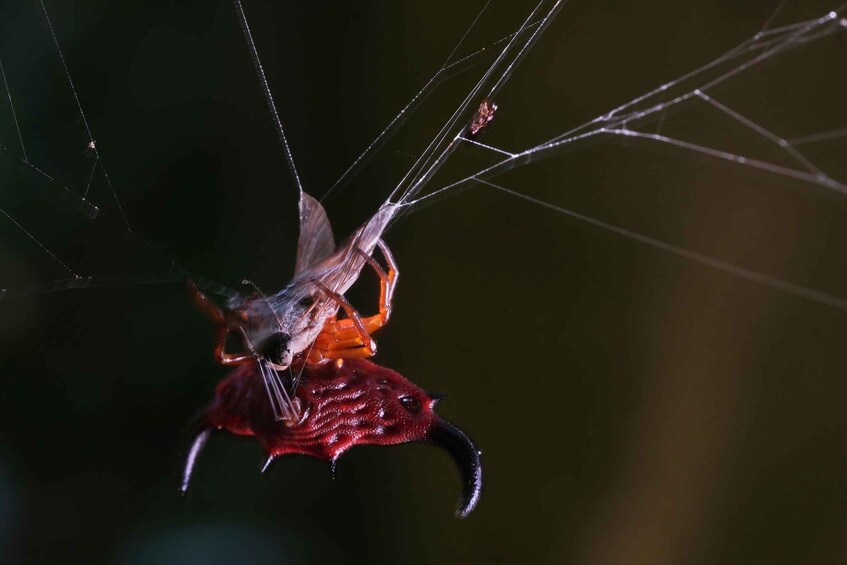
Here, the Lokobe Forest is not just a backdrop. It is an ancient and well-preserved ecosystem, home to many species endemic to Madagascar. Under the biologist's guidance, learn to observe the forest in a different way: a rustle in the foliage may reveal a group of black lemurs; on a branch, a chameleon may blend into the vegetation; at the foot of a tree, a tiny Brookesia may go almost unnoticed.
Each sighting is accompanied by an explanation that links the animal to its environment, the plant to its role in the ecosystem, and the forest to the island's natural history.
Here, the goal is not simply to see animals, but to understand what you are observing and how the different species live together.
Around noon, the group returns to the village for a lunch prepared locally by the community: grilled fish or chicken, fragrant rice, and tropical fruit. A convivial moment that also offers an opportunity to discover the local cuisine and the life of the Ampasipohy community.
The afternoon still allows time to continue exploring the forest before returning by sea canoe to Ambatozavavy.
Your vehicle will then take you back to your hotel, with an expected arrival time of around 5:30 p.m., depending on traffic conditions and the course of the activity.
Wildlife sightings can never be guaranteed. The forest is a natural environment: the presence and visibility of species depend in particular on the weather, the season and their activity at the time of the visit.
This is not just a tour: it is another way to learn how to read the living world.