Begin at the stone monument of the Former Nijō Imperial Villa, where your guide introduces Nijo‑jo Castle as the Kyoto stronghold of the Tokugawa shoguns and a World Heritage symbol of samurai power. Learn how it stood beside the Imperial Palace to watch over the emperor, hosted grand audiences for lords and envoys, then later became an imperial villa before opening to visitors.
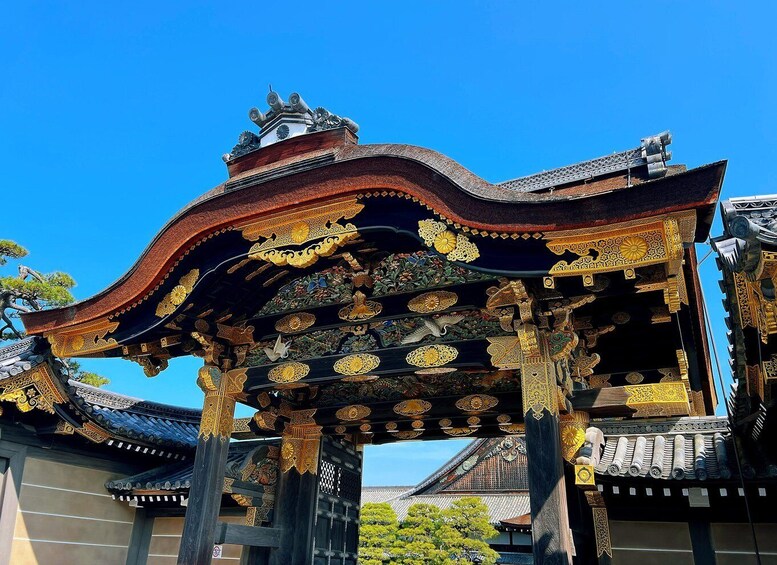
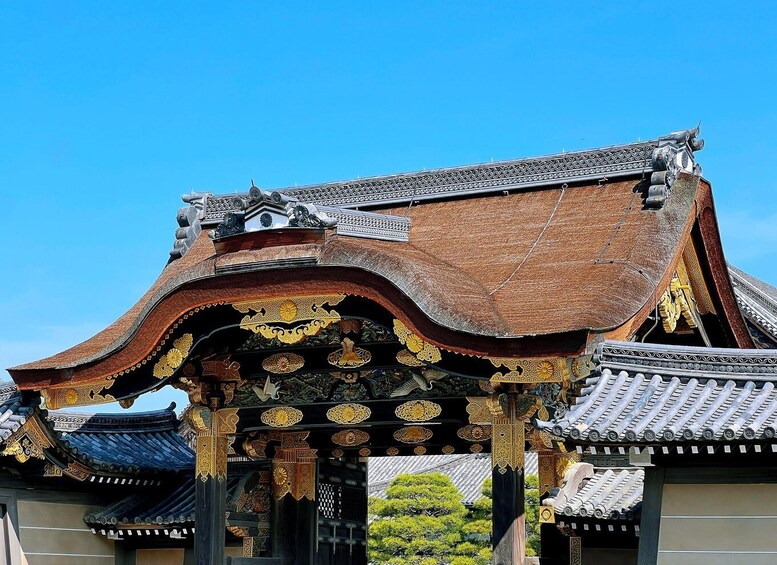
Walk to the East Main Gate along the outer moat and see how water, stone walls and high gates controlled everyone who entered. Pass the old guardhouse and the mud wall, then picture daimyo processions checked by armed sentries. At the richly carved Karamon, your guide points out dragons, cranes, pines and crests, showing how this “gate of honor” impressed court nobles and declared shogunal authority.
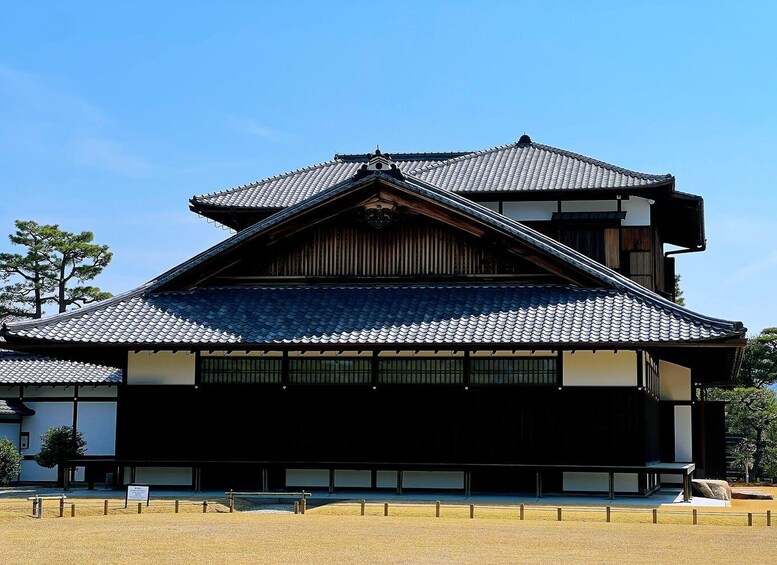
Inside Ninomaru Palace you follow the route once reserved for important guests. Waiting rooms with bold Kano‑school paintings of tigers and pines set a powerful tone as your guide explains how room rank and seating order expressed strict hierarchy. In the audience halls you stand where lords knelt before the shogun and hear how politics, ceremony and intimidation unfolded in these glittering spaces.
Deeper inside, the Black Study, White Study and flower‑themed rooms reveal a more private world, from daily life to the 1626 imperial visit that reshaped the interiors and later stays by emperors and princes when Nijo‑jo became an imperial residence, with stories of loyal retainers and tense councils adding legend to each stop.
Leaving the palace, you stop by the bell from the Kyoto magistrate's office and enter Ninomaru Garden, a classic pond‑strolling garden where crane and turtle islands, shaped rocks and clipped pines mirror in the water as your guide explains how this scenery became a theatre of power. This completes Route 1 (approx. 1.5 hours), and guests on Route 1 are dismissed here at Ninomaru Garden.
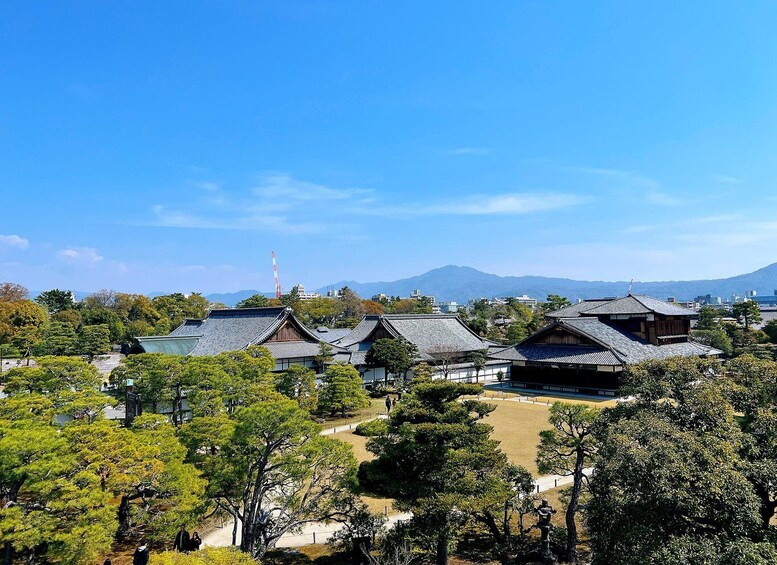
Guests continuing on Route 2 (approx. 1 additional hour) cross to the Honmaru area via the East Bridge, pass the inner gate and inner moat, and reach the former keep's stone base—a panoramic viewpoint over the castle and city. The Honmaru Garden and the palace moved here from the Imperial Palace for imperial visits turn the fortress core into a refined retreat. Your guide shares how fire destroyed the tower, how the restoration of power to the emperor in 1867 unfolded in these very halls, and how legend, politics and daily life left their mark. You then pass through the West Tiger's Mouth gate and West Bridge into Seiryu‑en, a later garden blending Japanese and Western styles, where teahouse pavilions and Kamo viewing stones recall state banquets and foreign-guest receptions. Continue past the rice storehouse, the specimen Somei‑Yoshino cherry tree marking Kyoto's official bloom, the exhibition hall, and a survivor ginkgo from the Hiroshima atomic bomb, before returning along the outer edge of the castle grounds to the East Main Gate, where the tour concludes.