Kiyomizu-dera is much more than its famous wooden stage. Founded in 778, the temple has survived repeated fires, reconstruction, and more than twelve centuries of devotion. On this private in-depth tour, discover the history, Buddhist beliefs, architecture, legends, and living traditions behind one of Kyoto’s most important sacred sites.
Both tour options cover the essential story of Kiyomizu-dera.
Begin with the temple’s origins: monk Kenshin, later known as Enchin, the ascetic Gyoei, the sacred waters of Mt. Otowa, and warrior Sakanoue no Tamuramaro. Learn how the temple was repeatedly destroyed and rebuilt, how it changes through Kyoto’s four seasons, and how it became part of the UNESCO-listed Historic Monuments of Ancient Kyoto.
Along the approach, discover details many visitors miss: Jizoin-Zenkoji-do Hall, the historic horse stable, Benkei’s legendary staff and iron sandals, the unusual pair of A-gyo guardian dogs, Niomon Gate, the Shoun Seiryu dragon, the Seiryu-e procession, the bell tower, and Mizuko Kannon.
At Zuigudo Hall, learn about—or, when available, experience—the Tainai-meguri, a symbolic walk through darkness and spiritual rebirth.
Continue through the central precinct past the Three-Story Pagoda, West Gate, Sutra Hall, Tamura-do, Todoroki Gate, Asakura-do, and Shusse Daikokuten.
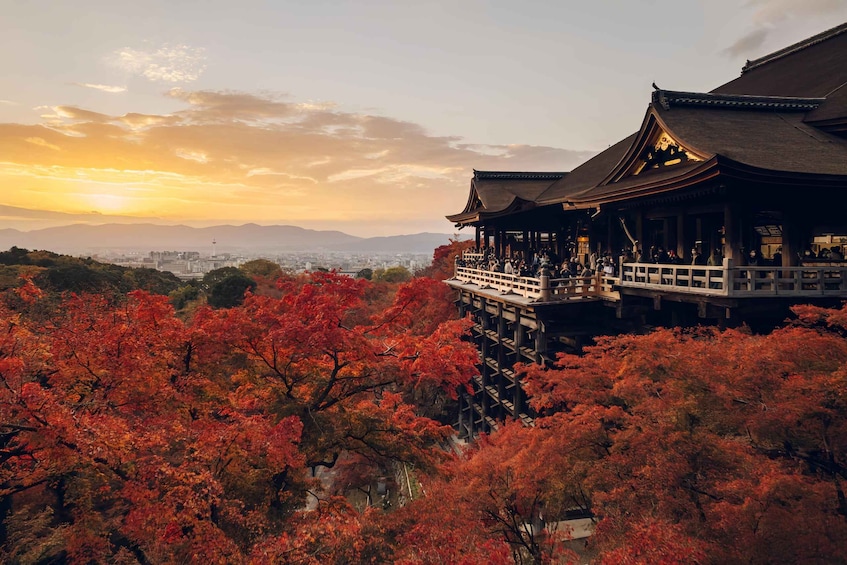
At the National Treasure Main Hall, explore the Eleven-Headed Thousand-Armed Kannon and Sennichi-mairi. Step onto the famous wooden stage and learn why it served as a sacred platform for performances offered to Kannon, how its timber structure uses traditional joinery, and why “to jump from the stage of Kiyomizu” came to mean making a bold decision. Learn also how this 400-year-old structure is being preserved for the future.
After the Main Hall, continue past Jishu Shrine, currently under restoration and explained from outside, then Nishi-muki Jizo-do, Shaka-do, the Hundred Jizo statues, Amida-do, Otowa Inari, and memorials to ceramic artists Ninsei and Kenzan.
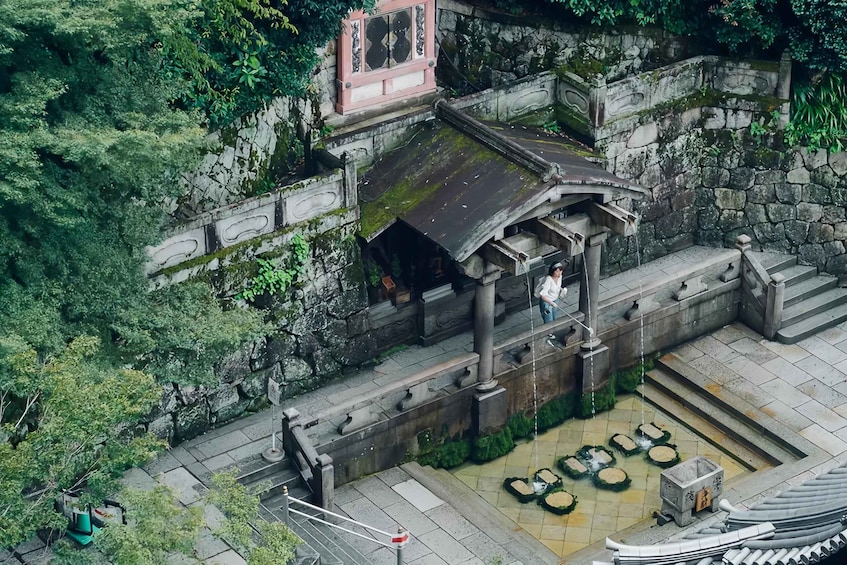
Both routes reach Otowa Waterfall, the sacred spring from which Kiyomizu-dera takes its name.
R1: Private Essential In-Depth Tour – Your Group Only (1.5h)
A focused exploration of Kiyomizu-dera’s essential history, main sacred buildings, legends and Kannon worship. The tour ends at Otowa Waterfall.
R2: Private Complete In-Depth Tour – Your Group Only (2.5h)
Includes everything in R1, plus a wider exploration of the temple grounds.
Before the central precinct, explore the quieter northern area: Chukodo and Abbot Onishi Ryokei, the guardian shrine, the Thousand Stone Buddhas, Jojuin, the Moon Garden when specially open, the North Gate, and Benzaiten.
The route also continues to Okuno-in, Taizan-ji, and the Koyasu Pagoda, with traditions of Kannon worship, childbirth, and family protection.
After Otowa Waterfall, continue downhill to the Aterui and More monument, the historic Shitakiri and Chuboku teahouses, an eleven-tiered stone pagoda, and Hojo Pond, where the tour ends.