

- List your property
- Support
- Trips
 Members save 10% or more on over 100,000 hotels worldwide when you’re signed in
Journey to Multan 2 Day Cultural and Heritage Tour from Lahore
By Pakistan Guided Tours
Free cancellation available
includes taxes & fees
per adult*
*Get a lower price by selecting multiple travelers
Features
- Free cancellation available
- 2d
- Mobile voucher
- Instant confirmation
- Selective hotel pickup
- Multiple languages
Overview
Experience the timeless charm of Multan on a private, expertly guided journey through the “City of Saints.” Discover magnificent Sufi shrines, historic forts, exquisite Islamic architecture, vibrant bazaars and centuries-old cultural landmarks.
Travel comfortably with a dedicated local guide who brings Multan’s fascinating history, spirituality and traditions to life. Designed for international travellers seeking an authentic and personalized cultural experience, this premium private tour combines heritage, photography, local insights and warm Pakistani hospitality in one unforgettable day.
Activity location
- Harappa Museum
- Chichawatni Harappa Road, Harappa
- 57170, Sahiwal, Pakistan
Meeting/Redemption Point
- Harappa Museum
- Chichawatni Harappa Road, Harappa
- 57170, Sahiwal, Pakistan
Check availability
Journey to Multan 2 Day Cultural and Heritage Tour from Lahore in Multilingual
- 2d
- Opening hours: Tue 8:30-18:00
- English
Pickup included
Price details
P 48,442.40 x 1 AdultP 48,442.40
Total
includes taxes & fees
*Get lower prices by selecting more than 2 adults
What's included, what's not
- Private transportation
- One Night Hotel Accommodation in Multan in Ramada By Wyndham Multan
- All sightseeing entrance tickets which very high as compared to locals
- Professional & expert driver
- Food of driver & guide
- Bottled mineral water on board
- Pickup & drop-off from hotel/airport
- Some good surprises
- Air-conditioned vehicle
- Fuel surcharge
- English speaking guide with extensive local knowledge
- All road & toll taxes
- Parking Fees
- Breakfast, lunch & dinner
- Domestic/international airfare
- Tip of the driver & guide that is up to the guest (optional)
- Anything which is not included in inclusion
- Personal expenses
- Shopping
Know before you book
- Public transportation options are available nearby
- Infants are required to sit on an adult’s lap
- Suitable for all physical fitness levels
Activity itinerary
Day 1: Lahore to Multan via Harappa
- 2 stops
- Meals: Not included
- Accommodation: Ramada by Wyndham Multan
Harappa Museum
- 1h
- Admission ticket included
Discover the fascinating world of the ancient Indus Valley Civilization at Harappa Museum. Explore archaeological discoveries, ancient pottery, tools, ornaments, and artefacts that reveal the remarkable urban planning, craftsmanship, and daily life of a civilization dating back over 4,000 years. Accompanied by your guide, gain insight into one of South Asia’s most significant archaeological sites and uncover the stories of an extraordinary ancient society on your journey from Lahore to Multan.
Harappa Civilization
- 2h
- Admission ticket included
Explore the archaeological site of Harappa, one of the major urban centres of the ancient Indus Valley Civilization. Discover the remains of an extraordinary Bronze Age city, with traces of ancient streets, brick structures, craft production, and urban planning dating back over 4,000 years. Uncover the fascinating history of a civilization renowned for its remarkable organization, skilled craftsmanship, and enduring cultural legacy.
Day 2: Multan Heritage & Sufi Shrines: Explore the Historic City of Saints — Return to Lahore
- 10 stops
- Meals: Not included
- Accommodation: Not included
Tomb Shah Rukne Alam
- 20m
- Admission ticket included
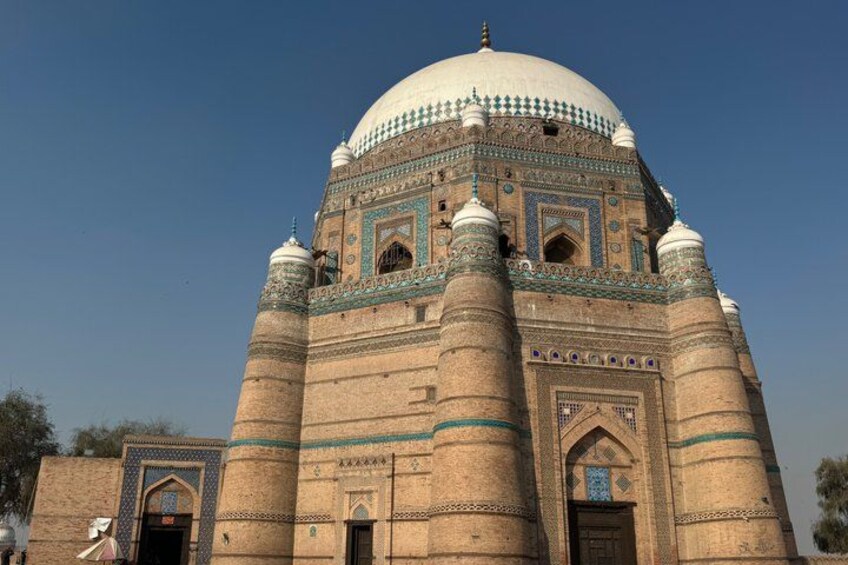
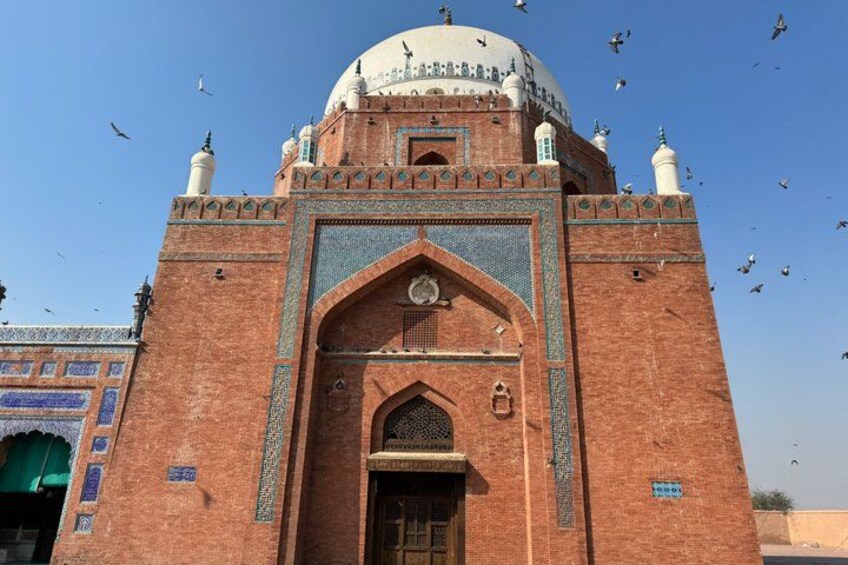
The tomb was built during the 14th century, traditionally attributed to Sultan Ghiyas-ud-Din Tughluq. Originally intended as his own mausoleum, it was later dedicated to Shah Rukn-e-Alam after the saint's death.
The shrine is famous for its massive hemispherical dome, red brickwork, blue glazed tiles, and beautiful geometric decorations. It is considered one of the finest examples of early Islamic architecture in the Indian subcontinent.
Historical significance: The shrine remains an important centre of Sufi spirituality, attracting devotees and visitors from across Pakistan and around the world.
Tomb of Shah Rukn e Alam (Bahauddin Zakaria)
- 20m
- Admission ticket included
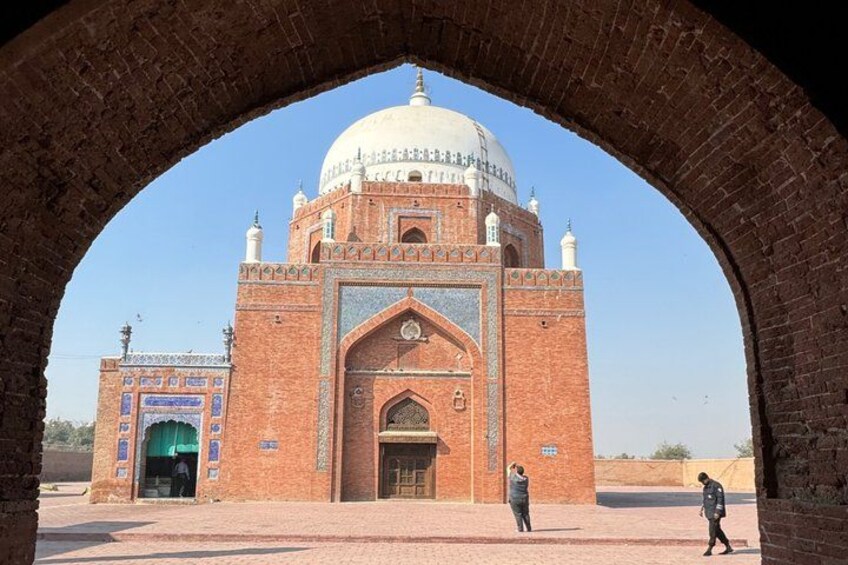
He belonged to the Suhrawardiyya Sufi order and established Multan as an important centre of Islamic learning and Sufi spirituality. His teachings emphasised devotion to Allah, spiritual discipline, knowledge, and service to humanity.
His shrine, located on the historic high mound of Multan, is an important religious and architectural landmark. It features traditional brickwork, a distinctive dome, and historic decorative elements.
Historical significance: Hazrat Bahauddin Zakariya is remembered as one of the most influential Sufi saints of South Asia. His legacy continues to attract pilgrims and visitors to Multan, the City of Saints.
Qila Kohna Qasim Bagh Stadium
- 20m
- Admission ticket included
Qila Kuhna Qasim Bagh is a historic fort area in Multan, situated on a raised mound overlooking the old city. The fort's history dates back many centuries, and Multan's strategic location made it an important centre of political power, trade, and defence.
The fort was strengthened and rebuilt by various rulers over time, including the Mughals and later regional powers. It was historically associated with the defence of Multan and housed important structures, including the famous Damdama viewpoint & British Monument.
Much of the fort's original structure was damaged during the British siege of Multan in 1848–49. Today, the area remains an important historical landmark, close to the shrines of Hazrat Bahauddin Zakariya and Hazrat Shah Rukn-e-Alam.
Historical significance: Qila Kuhna Qasim Bagh reflects Multan's strategic importance and its long history of successive civilizations, rulers, and cultural traditions.
Tomb Shah Shams Sabzwari Tabrez
- 20m
- Admission ticket included
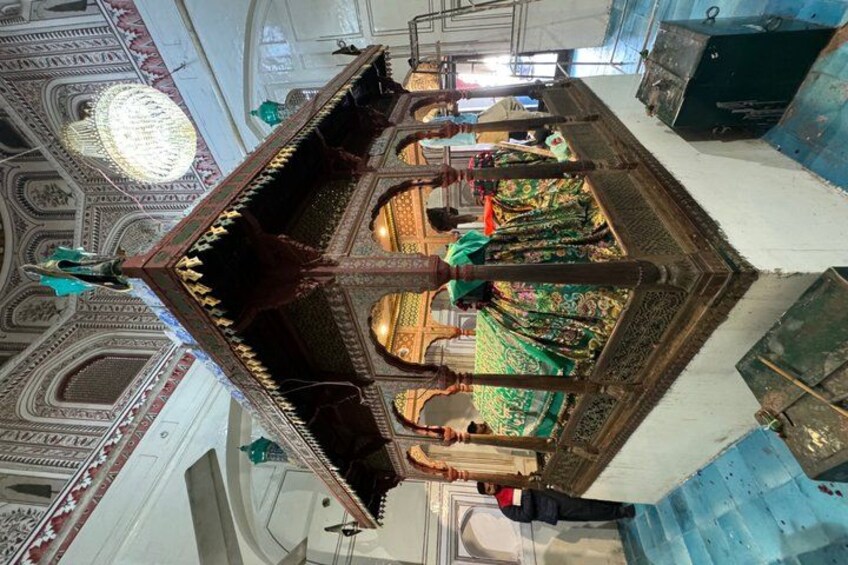
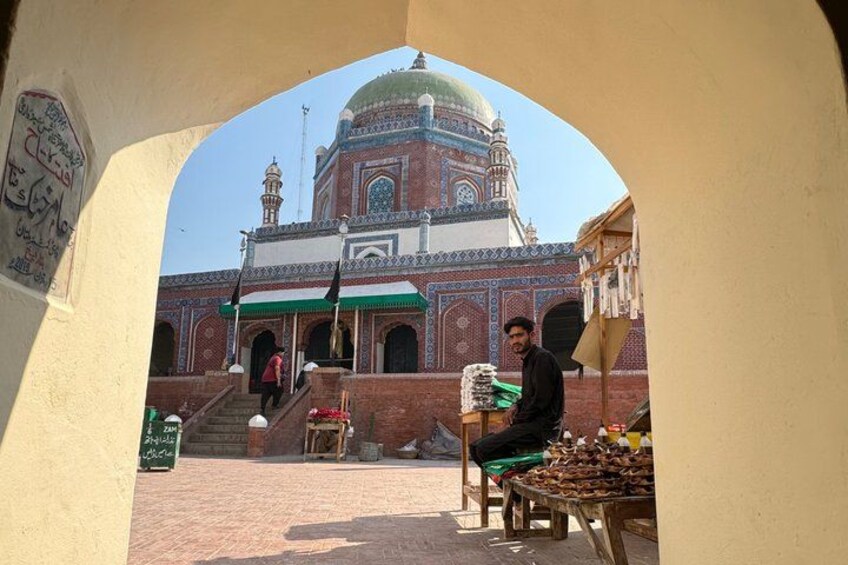
Hazrat Shah Shams Tabrez Sabzwari was a celebrated Sufi saint associated with Multan, believed to have arrived in the region during the 13th century. He is remembered for his spiritual teachings, devotion to Allah, and efforts to spread the message of Islam.
According to local traditions, he played an important role in the spiritual development of Multan and inspired many people through his teachings of love, humility, and devotion. His shrine is an important religious landmark and attracts devotees from across Pakistan.
The shrine is known for its distinctive architecture and historical significance, reflecting Multan's rich Sufi heritage.
Historical significance: The shrine of Shah Shams Tabrez Sabzwari represents the enduring influence of Sufism in Multan, the City of Saints, where spiritual traditions have flourished for centuries.
Shrine of Shah Yusuf Gardezi
- 20m
- Admission ticket included
Hazrat Shah Yousaf Gardezi was a respected Sufi saint believed to have come to Multan from Gardez, in present-day Afghanistan, during the 11th century. He is traditionally regarded as one of the early Sufi figures who helped spread Islam in the Multan region.
He devoted his life to spiritual teaching, religious guidance, and promoting values of humility, compassion, and devotion to Allah. His shrine in Multan is an important part of the city's religious and cultural heritage.
The shrine is known for its historic architecture and spiritual significance, attracting devotees who come to pay their respects and offer prayers.
Historical significance: Shah Yousaf Gardezi is remembered as an important figure in Multan's early Sufi tradition, contributing to the city's reputation as the City of Saints.
Tomb Shah Ali Akbar
- 20m
- Admission ticket included
Hazrat Shah Ali Akbar is a revered Sufi figure associated with the Multan region. His shrine is part of the area's rich spiritual heritage, reflecting the longstanding traditions of Sufism in southern Punjab.
Local traditions associate Shah Ali Akbar with the family and spiritual legacy of the region's celebrated Sufi saints. His shrine attracts devotees who visit to offer prayers and pay their respects.
Historical significance: The shrine represents the enduring influence of Sufi traditions in the Multan region, where spiritual centres have played an important role in religious life, local culture, and community identity for centuries.
Eidgah Mosque
- 20m
- Admission ticket included
Shahi Eidgah Mosque is a historic Mughal-era mosque in Multan, built in 1735 AD during the reign of Mughal Emperor Muhammad Shah. It was commissioned by Nawab Abdul Samad Khan, the Mughal governor of Multan.
The mosque is known for its impressive architecture, featuring a spacious prayer hall, elegant domes, traditional brickwork, and decorative tilework. It was constructed to accommodate large congregations for Eid prayers and other religious gatherings.
Over the centuries, the mosque has witnessed significant changes in Multan's political and cultural history while remaining an important place of worship.
Historical significance: Shahi Eidgah is a valuable example of Mughal religious architecture and reflects Multan's rich Islamic heritage and the city's historical importance during the Mughal period.
Multan
- 30m
Multani Blue Pottery is one of the most famous traditional crafts of Multan, renowned for its beautiful blue, turquoise, and white designs. Its artistic roots are linked to Persian and Central Asian ceramic traditions, which spread across the region through trade, migration, and cultural exchange.
Local artisans developed their own distinctive style, decorating pottery, plates, vases, and architectural tiles with floral patterns, geometric designs, and traditional motifs. The craft became an important part of Multan's artistic heritage, complementing the decorative tilework found at many historic shrines and monuments.
Historical significance: Multani blue pottery represents centuries of artistic exchange and craftsmanship. Today, local artisans continue to preserve this traditional skill, making it a memorable cultural experience for visitors to the City of Saints.
Ghanta Ghar
- 30m
- Admission ticket included
Ghanta Ghar, or Multan Clock Tower, is a prominent landmark built during the British colonial period. Its construction began in 1884 and was completed in 1888. The building was named Northbrook Tower in honour of Thomas George Baring, the Earl of Northbrook, a former Viceroy of India.
Located in the heart of Multan, the clock tower reflects British-era architectural influences and served as an important administrative and civic centre. Its distinctive clock and historic building remain recognisable symbols of the city's colonial past.
Historical significance: Ghanta Ghar represents an important chapter in Multan's history, connecting the city's ancient heritage with its colonial-era development. Today, it remains a well-known landmark surrounded by busy markets and commercial streets.
Hussain Agahi Bazar
- 2h
Hussain Agahi Bazaar is one of the most famous traditional markets in Multan, located in the historic heart of the old city. For generations, it has served as a centre of local trade, traditional crafts, textiles, footwear, spices, and Multani sweets.
Old Multan City is one of the oldest continuously inhabited urban centres in South Asia, with a history stretching back thousands of years. Its strategic location along ancient trade routes made it an important centre of commerce, culture, and religion. The old city is famous for its narrow streets, historic gates, traditional bazaars, Sufi shrines, and distinctive architecture.
Hussain Agahi Bazaar reflects the living traditions of old Multan, where historic commerce continues alongside everyday local life.
Historical significance: Exploring Hussain Agahi Bazaar and the old city offers visitors an authentic glimpse into Multan's rich heritage, traditional craftsmanship, vibrant street life, and enduring identity as the City of Saints.
Location
Activity location
- Harappa Museum
- Chichawatni Harappa Road, Harappa
- 57170, Sahiwal, Pakistan
Meeting/Redemption Point
- Harappa Museum
- Chichawatni Harappa Road, Harappa
- 57170, Sahiwal, Pakistan
Best Deals on Things to Do
Experience the wonders of the world up close with great deals on things to do near and far. Expedia offers one-of-a-kind activities that allow you to explore Sahiwal your way. Whether you love nature, culture, food, or a bit of adventure, we have the perfect activity for you.
Top Experiences in Sahiwal
With so many things to do in Sahiwal, planning the perfect day out may seem like a daunting task. Expedia is here to take the hassle out of finding the best attractions, tours, and activities in Sahiwal. Families, couples, and business travelers can all find the perfect activity in Sahiwal to create life-long memories with the help of Expedia.