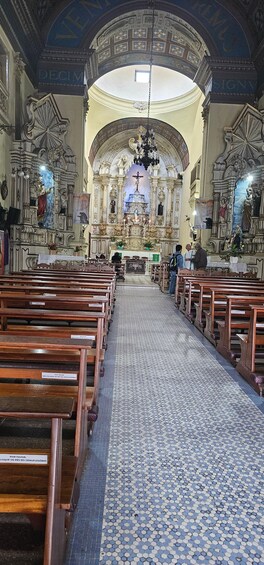
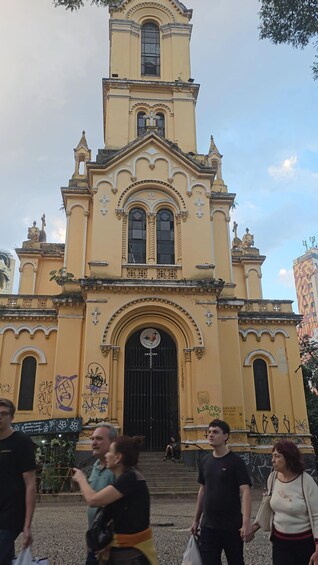
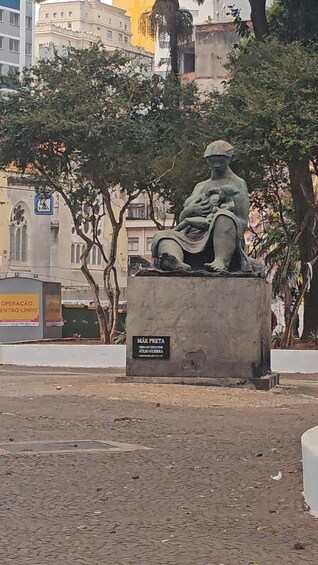
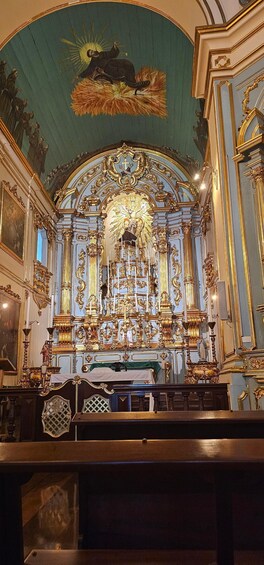
Our starting point is the former Largo da Forca (Gallows Square), now Praça da Liberdade (Liberty Square), where public hangings were carried out — many of them of enslaved and rebellious Black people. Next, we'll walk to the Church of Nossa Senhora dos Aflitos, one of the oldest in the city, with a hidden cemetery where the bodies of enslaved people and those condemned to death were buried.
We'll continue through the narrow streets of the neighborhood, highlighting the transformations brought about by historical erasure after the arrival of the Japanese community in the early 20th century. We'll visit landmarks such as the headquarters of the Lavapés Samba School, a symbol of the enduring presence and cultural resistance of Black people in the neighborhood, founded by Black workers and residents of the area.
During the tour, we will also talk about little-remembered historical figures, Black brotherhoods, slums and urban quilombos, and the formation of the neighborhood's identity before its “Orientalization.” Each stop will be an invitation to reflect on how Black memory has been silenced — and how it can be recovered in the present.
This tour is an immersion into the city's forgotten layers, where Black culture persists amid the colorful shopfronts and Oriental lanterns. It's a unique opportunity to see Liberdade through a different lens — more critical, more human and more authentic.
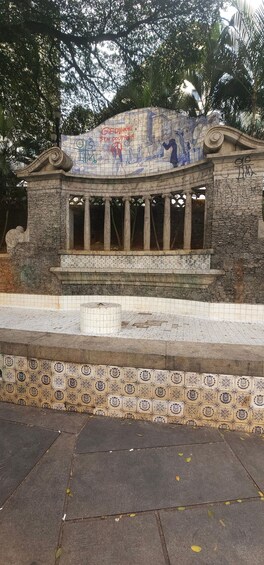
The tour ends at Paço dos Piques, now Ladeira da Memória, which was a stopping point for muleteers to water their horses at the fountain, also used by enslaved people.