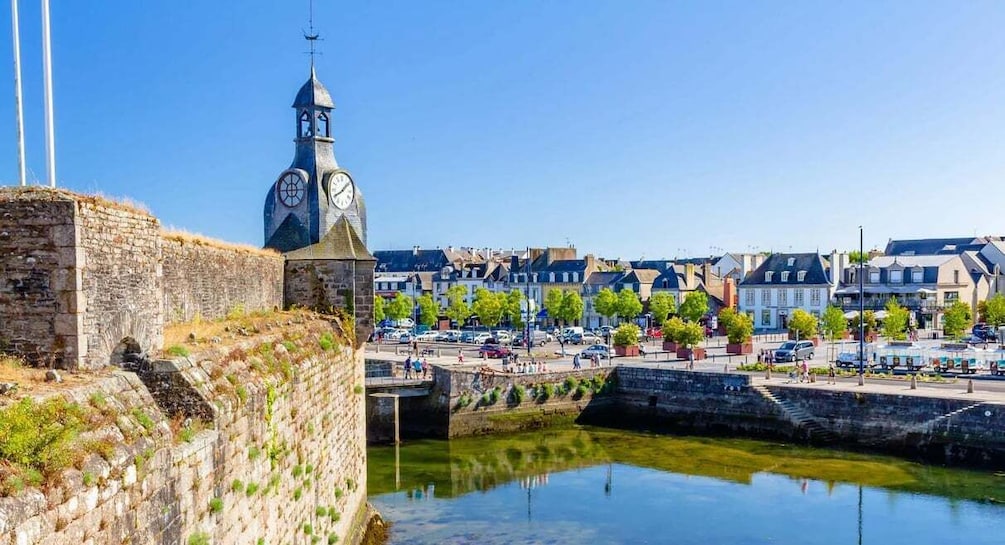
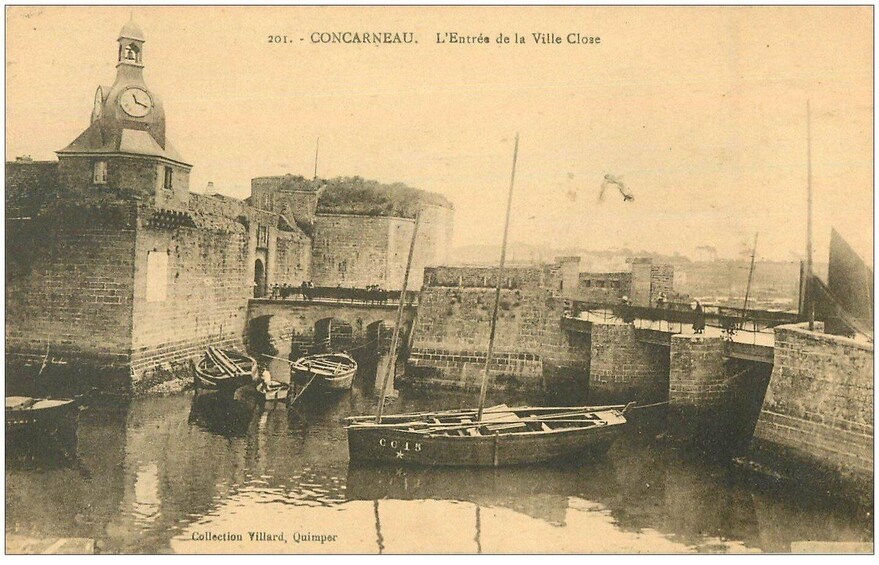
The meeting and drop-off point is on the bridge, at the entrance to the Ville Close.
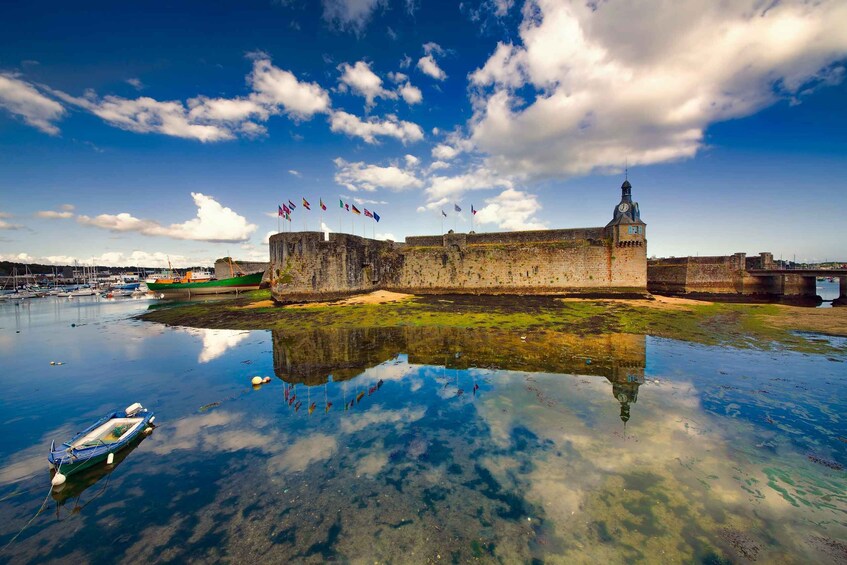
The tour therefore begins at the entrance to the Ville Close, an emblem of Concarneau, accessed by a bridge that spans the harbor. This historical gem, encircled by 15th-century ramparts, takes you back in time. Here, you'll discover charming cobbled streets lined with old houses, art galleries, crêperies and artisan shops. As you walk along the fortifications, enjoy a panoramic view of the bay, the shipyards and the fishing boats.
The tour continues inside the Ville Close with a stop in front of the Musée de la Pêche (Fishing Museum), housed in a former arsenal. The guide will talk about the maritime history of Concarneau, a major tuna fishing harbor, and the traditions of Breton fishing.
Leaving the Walled Town, you will head for the modern town center, located on the other side of the harbor. The group crosses the pedestrian footbridge to walk along the quays and admire the fishing and pleasure boats. The guide will then take you to the Marinarium, a center for discovering marine biodiversity. Although a tour of the interior is not included, the building, a former marine biology laboratory, is mentioned as evidence of the town's scientific commitment to the preservation of the marine environment.
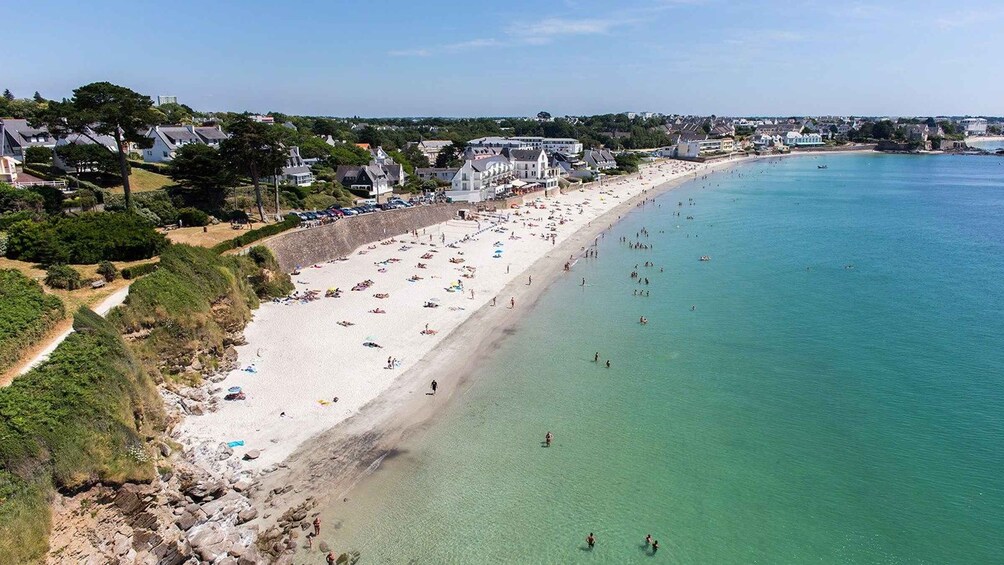
Next, the route follows the cliffside promenade, passing through the Jardin des Remparts, to Sables Blancs Beach. This coastal path offers a breath of sea air and superb vantage points over the ocean, the seaside villas and the islets offshore. The tour ends here, with your feet almost in the sand, with a final panorama of the Ville Close, majestic and peaceful, a reflection of a rich Breton heritage between the sea and history. The tour ends with a visit to the Musée de la Pêche (Fishing Museum), where you can enjoy this magnificent museum at your leisure.
This tour will be punctuated by anecdotes and Q&A sessions, such as the following: “It is said that in the 17th century, during an English attack, a captain hid a chest in the underground passages of the Walled Town. Since then, some locals claim to hear, during spring tides, the sound of chains and coins falling under the stones… But no treasure has ever been found.”
Or this one: “In the 20th century, after the sardine crisis, it was tuna fishing that saved Concarneau from destitution. The “tuna boats” would go out to sea for several weeks. It was hard and dangerous work, but their return was celebrated as an event throughout the town. The women would wait for them on the quays, sometimes with musicians. "